Library / The Pearl of Great Price
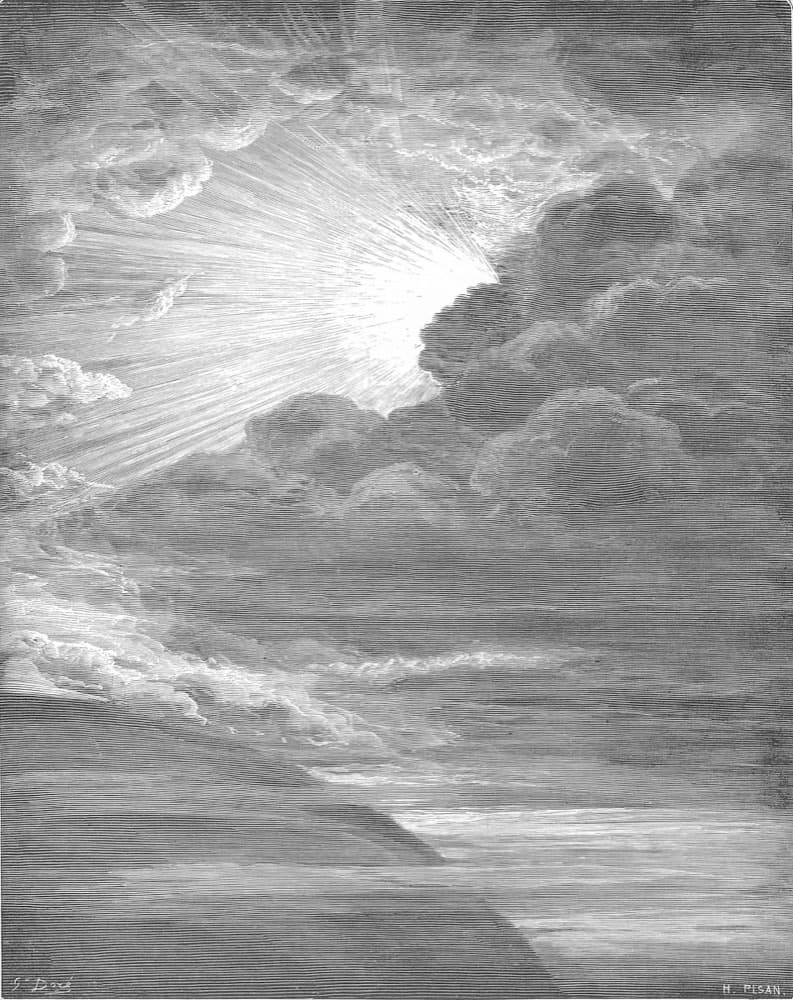
The Creation of Light
Pearl of Great Price
Moses Sees the Worlds
Moses 1, and a single verse that reorganises everything
Moses 1; compare Exodus 3; Genesis 1:145 min4 sections
A chapter that did not exist in any Bible before June 1830. Moses is shown the whole creation, collapses under the weight of it, is confronted by Satan, throws him out, and is then told God's entire purpose in one sentence. It is also the doorway the rest of the Pearl of Great Price walks through.
- Author
- Received by Joseph Smith as a revelation, June 1830, at the beginning of his work on the Bible
- Date
- June 1830; the narrative is set immediately before Exodus 3
- Place
- Given in Harmony, Pennsylvania, or Fayette, New York; set on 'an exceedingly high mountain'
- Audience
- Moses, and then everyone reading Genesis afterward
- Language
- English, as dictated
- Genre
- Visionary narrative; prologue to Genesis
By the end you should be able to
- Say where Moses 1 came from and what it was originally attached to.
- Explain what 'man is nothing' means in its own context, and what it does not mean.
- Trace the pattern of the confrontation with Satan and name the four things Moses does.
- State the purpose of God from Moses 1:39 and show how the rest of the chapter builds to it.
Where this chapter came from
Not a lost manuscript. A revelation, received while revising the Bible.
In June 1830 — two months after the Church was organised and three months after the Book of Mormon came off the press — Joseph Smith began what he called a translation of the Bible. He had no ancient manuscripts and no Hebrew or Greek; the work was done with a King James Bible open in front of him and a scribe beside him, and what came out was sometimes a small clarification and sometimes an entire chapter that no Bible had ever contained.
Moses 1 is the largest example of the second kind. It arrived as a prologue to Genesis, headed in the manuscript as 'a Revelation given to Joseph the Revelator June 1830.' Read in that setting the chapter is doing a specific job: it tells you who Moses was and what he had seen before Genesis 1:1 opens its mouth.
Where it sits in the canon
- Moses 1:1The chapter opens where Exodus 3 will shortly begin — with Moses on a mountain, having already met God.
- Exodus 3:1–6The burning bush. Moses 1 is positioned before this, which reframes the bush as a second interview rather than a first.
- D&C 45:60–61The Lord's instruction in March 1831 that the New Testament translation should proceed, showing the work as an ongoing commission.
The vision, and the collapse
Moses is shown everything, and it costs him.
1The words of God, which he spake unto Moses at a time when Moses was caught up into an exceedingly high mountain,
2And he saw God face to face, and he talked with him, and the glory of God was upon Moses; therefore Moses could endure his presence.
3And God spake unto Moses, saying: Behold, I am the Lord God Almighty, and Endless is my name; for I am without beginning of days or end of years; and is not this endless?
4And, behold, thou art my son; wherefore look, and I will show thee the workmanship of mine hands; but not all, for my works are without end, and also my words, for they never cease.
6And I have a work for thee, Moses, my son; and thou art in the similitude of mine Only Begotten; and mine Only Begotten is and shall be the Savior, for he is full of grace and truth; but there is no God beside me, and all things are present with me, for I know them all.
Three things are established before Moses has said a word. He is God's son. He is in the similitude of the Only Begotten — a likeness, not an equivalence. And he is about to be shown the workmanship of God's hands, but explicitly not all of it, because there is no all to show.
Verse 2 supplies the mechanism that makes the rest possible: the glory of God was upon Moses, therefore he could endure. This is a recurring rule in Latter-day Saint scripture — the presence of God is not survivable unmodified, and the modification is described as glory resting on the person rather than as God diminishing himself.
Two terms doing structural work
9And the presence of God withdrew from Moses, that his glory was not upon Moses; and Moses was left unto himself. And as he was left unto himself, he fell unto the earth.
10And it came to pass that it was for the space of many hours before Moses did again receive his natural strength like unto man; and he said unto himself: Now, for this cause I know that man is nothing, which thing I never had supposed.
11But now mine own eyes have beheld God; but not my natural, but my spiritual eyes, for my natural eyes could not have beheld; for I should have withered and died in his presence; but his glory was upon me; and I beheld his face, for I was transfigured before him.
The confrontation
The oldest recorded example of what to do when the adversary shows up while you are still on the floor.
Satan arrives immediately after the collapse — not during the vision, but in the exhaustion afterward. The timing is the first thing worth noticing, and anyone who has had a spiritual experience followed by a hard week will recognise it.
God, to Moses
"Behold, thou art my son." (v. 4)
"Thou art in the similitude of mine Only Begotten." (v. 6)
"I have a work for thee." (v. 6)
Satan, to Moses
"Moses, son of man, worship me." (v. 12)
The title is lowered: son of man, not son of God.
The demand is worship, and nothing is offered in return.
13And it came to pass that Moses looked upon Satan and said: Who art thou? For behold, I am a son of God, in the similitude of his Only Begotten; and where is thy glory, that I should worship thee?
15Blessed be the name of my God, for his Spirit hath not altogether withdrawn from me, or else where is thy glory, for it is darkness unto me?
18Get thee hence, Satan; deceive me not; for God said unto me: Thou art after the similitude of mine Only Begotten.
20And now Moses began to fear exceedingly; and as he began to fear, he saw the bitterness of hell. Nevertheless, calling upon God, he received strength, and he commanded, saying: Depart from me, Satan, for this one God only will I worship, which is the God of glory.
21And now Satan began to tremble, and the earth shook; and Moses received strength, and called upon God, saying: In the name of the Only Begotten, depart hence, Satan.
- He states who he is, in God's terms rather than Satan's — 'I am a son of God.'
- He compares the two glories, and finds the second is darkness.
- He refuses to be moved off the identity he was given, repeating it back verbatim.
- He calls on God for strength, and then commands in the name of the Only Begotten — and only then does Satan leave.
Principle
The defence against the adversary in this account is not argument or willpower, but a remembered identity and a delegated authority.
Moses does not out-reason Satan and does not out-last him. He answers with what God has already told him about who he is, and then acts in a name that is not his own. It takes four escalating attempts, and he is afraid during at least one of them.
The purpose, in one sentence
After Satan is gone, the vision resumes — and ends with the most quoted verse in the Pearl of Great Price.
33And worlds without number have I created; and I also created them for mine own purpose; and by the Son I created them, which is mine Only Begotten.
35But only an account of this earth, and the inhabitants thereof, give I unto you. For behold, there are many worlds that have passed away by the word of my power. And there are many that now stand, and innumerable are they unto man; but all things are numbered unto me, for they are mine and I know them.
37And the Lord God spake unto Moses, saying: The heavens, they are many, and they cannot be numbered unto man; but they are numbered unto me, for they are mine.
38And as one earth shall pass away, and the heavens thereof even so shall another come; and there is no end to my works, neither to my words.
39For behold, this is my work and my glory—to bring to pass the immortality and eternal life of man.
The order matters. Two verses about worlds without number and heavens that cannot be counted, and then a sentence in which the whole enterprise is defined by what happens to people. The scale of verses 33–38 is what gives verse 39 its force; quoted alone it is a nice thought, and quoted in place it is staggering.
The two nouns in verse 39
Principle
God's stated purpose is not the creation of worlds but the exaltation of the people who live on them.
Verse 39 makes the cosmos instrumental. Worlds are made, pass away and are replaced without end; the constant across all of it is what God is trying to accomplish in a person. Every doctrine in the Restoration downstream of this — the plan, the Atonement, the covenants, the temple — is method in service of that end.
To consider
- 01Moses learns his identity before he is shown the worlds. Would the vision have meant the same thing in the other order?
- 02Satan calls Moses 'son of man.' What does it cost a person to accept a smaller name than the one God gave them?
- 03Verse 39 says God's glory is a work done in people. What follows from that about what your own work is for?
What this lesson holds
A person's identity is given by God before it is tested by anyone else, and knowing it is the only reliable defence when it is challenged.
The presence of God is not survivable unaided; what makes it survivable is His glory resting on the person, not any strength of their own.
God's entire purpose is the immortality and eternal life of man — one unconditional gift and one conditional one, in a universe of worlds without number.
Check your reading
5 questions01Where does Moses 1 come from?
02Why could Moses endure God's presence?
03What does Moses mean by "man is nothing"?
04How does Moses finally get Satan to leave?
05What are the two things named in Moses 1:39?
Where to go next
Sources
- Moses 1 — The primary text.
- Bible Dictionary, "Joseph Smith Translation" — On what the JST is and is not
- The Joseph Smith Papers, Old Testament Revision 1 — The manuscript itself, including the June 1830 heading
- Pearl of Great Price Student Manual