Topics / Godhead
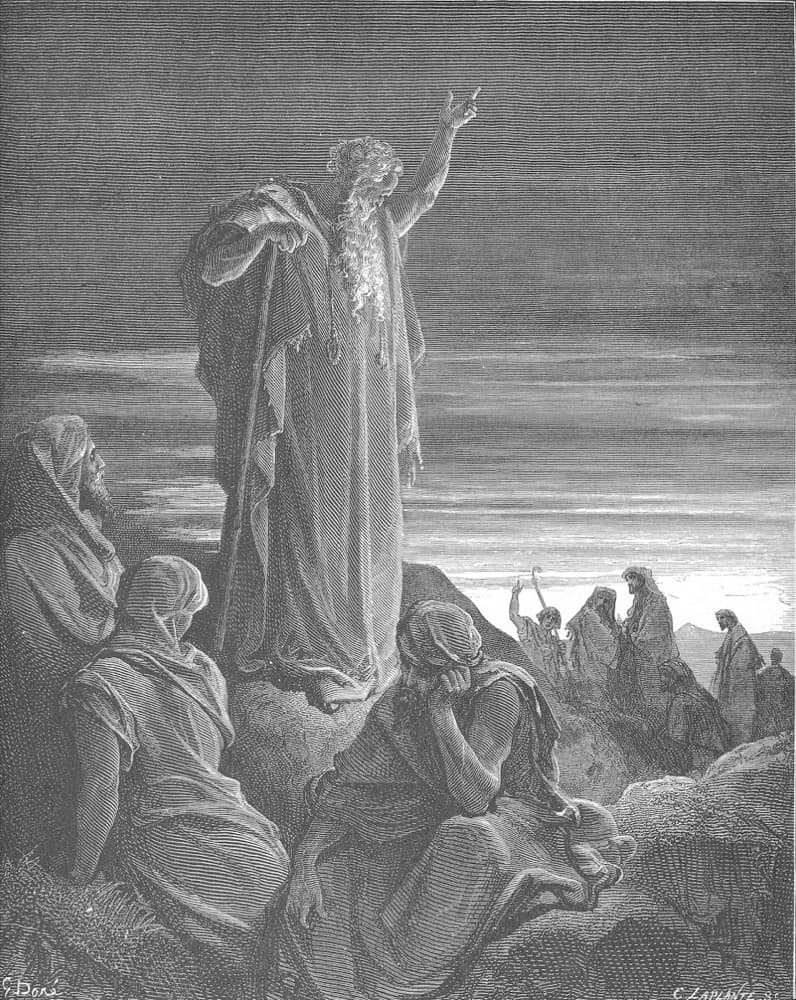
The Prophet Ezekiel
Embodied, personal, and once as we are
The Nature of God
The Restoration's most distinctive and most contested doctrine: that God is an exalted, embodied person, and that what He is, His children may become. Stated by Joseph Smith in 1844, echoed by Lorenzo Snow in a couplet, and deliberately left undeveloped by the Church since.
22 min2 sections
A person, not a principle
Scripture describes God doing things persons do. He speaks, walks, remembers, is grieved, rejoices, and is moved with compassion. Classical theology reads these as accommodations to human weakness — anthropomorphisms. Latter-day Saint theology reads them, for the most part, straight.
The texts that push this way
- Genesis 1:26–27Created in the image of God, ṣelem — a word used elsewhere of physical representations.
- Exodus 33:11'The Lord spake unto Moses face to face, as a man speaketh unto his friend.'
- Moses 7:28–33Enoch sees God weep, and asks how it is possible. The answer is one of the most affecting passages in scripture.
- D&C 130:22The Father has a body of flesh and bones as tangible as man's.
- Ether 3:6–16The brother of Jared sees the finger, and then the whole body, of the premortal Christ.
28And it came to pass that the God of heaven looked upon the residue of the people, and he wept; and Enoch bore record of it, saying: How is it that the heavens weep, and shed forth their tears as the rain upon the mountains?
33And unto thy brethren have I said, and also given commandment, that they should love one another, and that they should choose me, their Father; but behold, they are without affection, and they hate their own blood.
Enoch's question is a good one, and the answer is not a correction. God does not tell him he has misunderstood; He explains why He is weeping. A God 'without body, parts or passions' cannot be the subject of this passage.
The doctrine of divine potential
In April 1844, at the funeral of King Follett, Joseph Smith preached that God was once as man now is, and that men may become as God is. Lorenzo Snow had put a similar idea into a couplet years earlier. It is the most distinctive claim in Latter-day Saint theology, and the one most often caricatured.
The scriptural basis
- Romans 8:16–17'Heirs of God, and joint-heirs with Christ' — the strongest New Testament statement, and Paul's own word for it is sunklēronomos, co-heir.
- Acts 17:28–29Paul at Athens: 'we are the offspring of God.' He then argues from that to the absurdity of idols.
- Psalm 82:6'I have said, Ye are gods; and all of you are children of the most High' — quoted by Christ Himself in John 10:34.
- D&C 132:19–20'Then shall they be gods, because they have no end.' The most explicit statement in the canon.
- D&C 76:58'Wherefore, as it is written, they are gods, even the sons of God.'
Principle
God is an exalted, embodied person, and human beings are His literal children with the potential to become like Him — a destination, not a promotion.
The doctrine is about family rather than rank. Every scriptural statement of it is embedded in language of inheritance, sonship and adoption, and every one of them makes Christ the mechanism rather than a competitor.
What this topic holds
God is a person with a body, capable of grief and joy, and scripture's descriptions of Him are to be read more literally than tradition allows.
Human beings are the literal offspring of God, and joint-heirs with Christ of everything the Father has.
Check your reading
3 questions01How does Latter-day Saint reading treat scripture's descriptions of God's body and emotions?
02Is the idea of becoming like God unique to Latter-day Saints?
03What word does Paul use in Romans 8:17?
Where to go next
Sources
- Gospel Topics Essay, "Becoming Like God"
- Gospel Topics, "God the Father"
- D&C 130:22; D&C 132:19–20; Moses 7:28–33 — The primary texts.