Library / Foundations of the Restoration
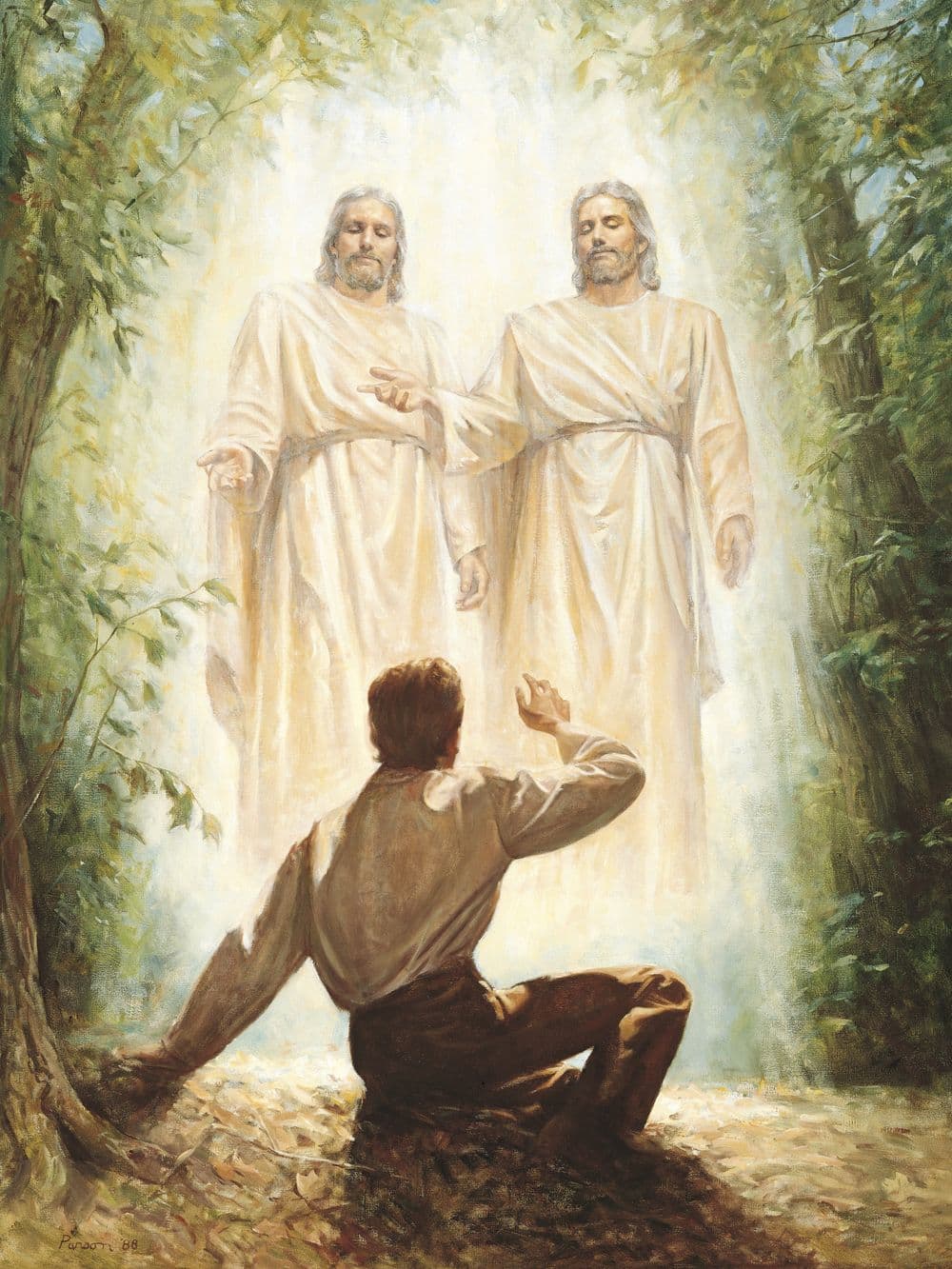
The First Vision · JS—H 1:14–20
Pearl of Great Price
Four Accounts of One Morning
The First Vision, read the way historians read it
Joseph Smith—History 1:5–20; James 1:5–6; Acts 26:12–1950 min4 sections
There is not one account of the First Vision; there are four in Joseph Smith's own voice and at least five more from people who heard him tell it. They differ, and the differences are the most interesting thing about them. This lesson lays them side by side and says plainly what agrees, what does not, and what follows.
- Author
- Joseph Smith, four times between 1832 and 1842, plus contemporaries who recorded him telling it
- Date
- The event: spring 1820. The accounts: 1832, 1835, 1838, 1842.
- Place
- A grove near the Smith farm in Manchester Township, New York
- Audience
- Different each time — a private history, a visiting stranger, the public, a newspaper editor
- Genre
- Autobiography, journal, apologetic history, and a letter to a journalist
By the end you should be able to
- Name the four primary accounts, their dates and their intended audiences.
- State what all four agree on and where they differ, without minimising either.
- Explain why the differences are what you would expect from an honest witness rather than evidence against one.
- Say what the Church's own Gospel Topics essay concludes.
The four accounts
Written across ten years, to four different sets of readers, for four different reasons.
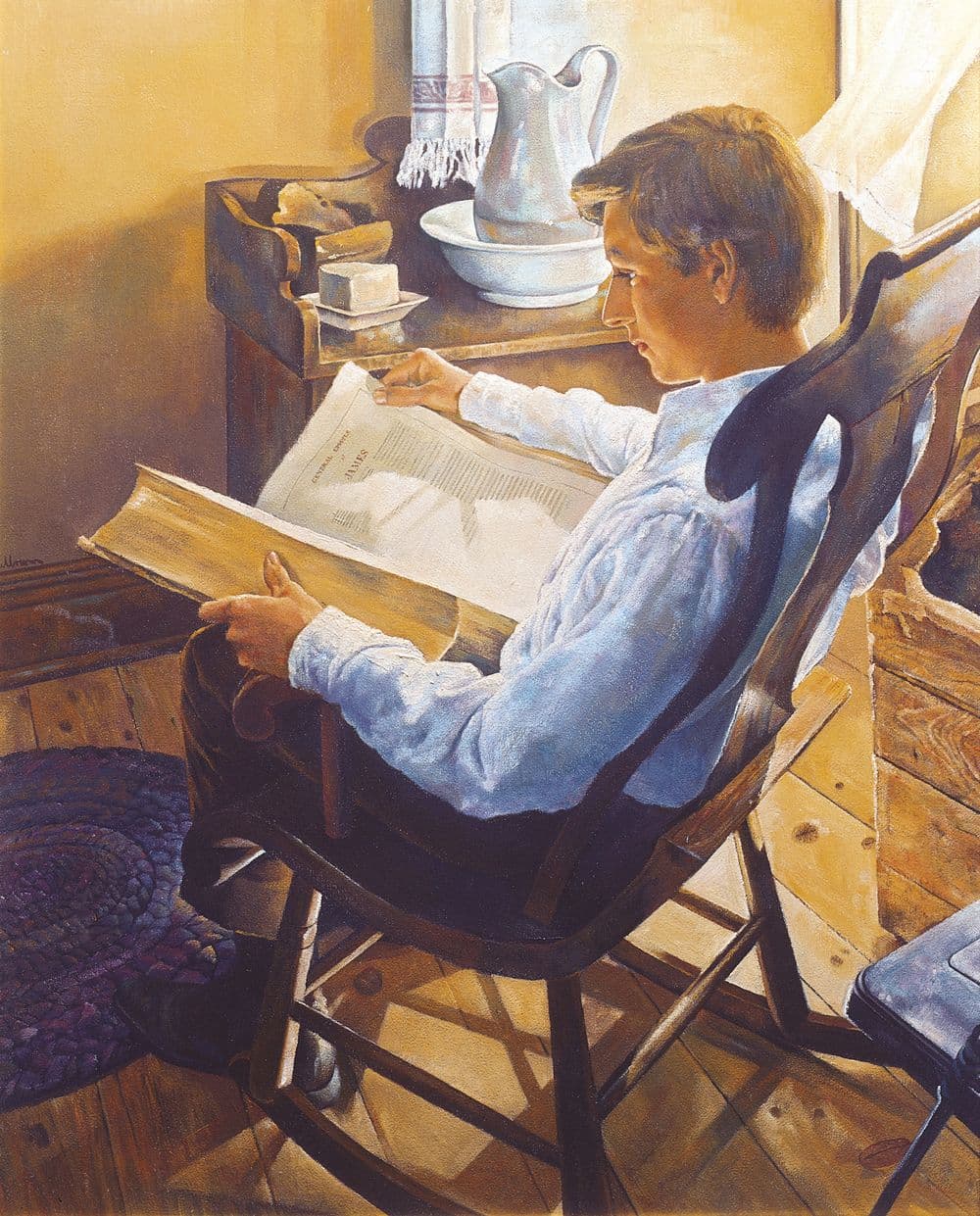
Before the grove: a fourteen-year-old reading James 1:5. · JS—H 1:5–13
For most of the twentieth century Latter-day Saints knew one account of the First Vision: the 1838 version canonised as Joseph Smith—History. The others existed in archives and were published in Church magazines from the 1960s onward; all four are now printed together on the Church's own website and analysed in a Gospel Topics essay. Anyone who first encounters the earlier accounts as an accusation has been badly served, and the remedy is simply to read them.
| Date | Form | Audience | What it emphasises |
|---|---|---|---|
| 1832 | History begun in Joseph's own hand — the only account partly in his own writing | A private history, not published in his lifetime | Forgiveness of sins. His concern is stated as 'the welfare of my immortal soul,' and the account reads as a conversion narrative. |
| 1835 | Journal entry recording what he told a visitor, Robert Matthews, on 9 November | One man, in conversation | The personages, and the angels. It says he saw one personage, then another, and that he 'saw many angels in this vision.' |
| 1838 | Dictated history, later canonised as Joseph Smith—History | The public, expressly to answer accusations | Which church to join. This is the account with the fullest narrative of the religious excitement and the clearest statement of the Father introducing the Son. |
| 1842 | The Wentworth Letter, published 1 March 1842 in the Times and Seasons | John Wentworth, editor of the Chicago Democrat, and his readers | A brief, plain summary for a non-member audience, followed by the Articles of Faith. |
What every account agrees on
Before the differences, the constants — and there are more of them than the objection usually allows.
- A boy, alone, in the spring, in a wooded place near his home.
- A period of religious confusion and personal concern preceding it.
- Prayer — vocal prayer, offered for the first time in that manner.
- An opposing power encountered before the light, which he could not overcome by himself.
- A pillar of light descending, brighter than the sun.
- A divine personage — in three of the four, two personages — who speaks to him.
- Forgiveness extended, and a warning that the churches of the day were not to be joined.
- A ministry begun: he came out of the grove with something to do.
16But, exerting all my powers to call upon God to deliver me out of the power of this enemy which had seized upon me… I saw a pillar of light exactly over my head, above the brightness of the sun, which descended gradually until it fell upon me.
17It no sooner appeared than I found myself delivered from the enemy which held me bound. When the light rested upon me I saw two Personages, whose brightness and glory defy all description, standing above me in the air. One of them spake unto me, calling me by name and said, pointing to the other—This is My Beloved Son. Hear Him!
The 1832 account, in Joseph's own hand, records the Lord speaking to him and saying his sins were forgiven — 'behold I am the Lord of glory I was crucifyed for the world.' It does not narrate two personages the way 1838 does. That is the single largest difference between the accounts, and it should be stated plainly rather than smoothed over.
Where they differ, and why that is normal
The test is not whether an honest account varies, but how it varies.
Paul's conversion, three times in Acts
Acts 9: the men with him heard a voice but saw no man.
Acts 22: they saw the light but heard not the voice.
Acts 26: adds that the voice spoke in Hebrew, and gives the commission at length.
All three are in one book, by one author, about one event.
The First Vision, four times
1832: forgiveness, told as a conversion.
1835: the personages and the angels, told to a stranger.
1838: which church to join, written to answer critics.
1842: a compressed public summary for a newspaper.
Luke did not think Acts 9 and Acts 22 contradicted each other, and he had both in front of him. What varies in each retelling is what the occasion called for — which is how every human being tells a significant story, and is in fact one of the standard tests historians apply. A witness who repeats an account in identical words every time is usually reciting rather than remembering.
“The various accounts of the First Vision tell a consistent story, though naturally they differ in emphasis and detail.”
Principle
Differences between honest accounts of the same event are evidence of memory rather than of fabrication, provided the core does not move — and here it does not.
The constants across all four are a boy, a prayer, an opposing power, a light, a divine person who speaks, forgiveness, and an instruction not to join the existing churches. What varies is emphasis, detail and length. That is the ordinary profile of a real recollection told to different audiences over a decade.
What the vision establishes
Four doctrines, all of them contested in 1820 and none of them minor.
One substance in three persons, against three beings perfectly one in purpose. The difference is not a technicality — it changes what the baptism of Jesus and John 17 are describing.
| Doctrine | From the account | What it contradicted |
|---|---|---|
| The Father and the Son are separate, embodied persons | Two Personages, one introducing the other by name | The classical Trinitarian formulation of one substance in three persons, standard in every creed of Christendom |
| God still speaks | A boy asked a question and received an answer | The widespread assumption that revelation ceased with the apostles |
| The heavens are open to the ordinary | A fourteen-year-old with no education, standing, no office and no training | The expectation that revelation, if it came at all, would come to the credentialed |
| An apostasy had occurred | The instruction not to join any of them, 'for they were all wrong' | The assumption that the existing churches, whatever their differences, collectively held the authority |
It is worth registering how much of the Restoration is already implied on that first morning. Nothing about plates, priesthood, temples or gathering has happened yet; but a God who has a body, speaks, answers ordinary people, and is not identical with the churches of the day is most of the theological argument already.
21Some few days after I had this vision, I happened to be in company with one of the Methodist preachers… I took occasion to give him an account of the vision which I had had. I was greatly surprised at his behavior; he treated my communication not only lightly, but with great contempt, saying it was all of the devil.
23It caused me serious reflection then, and often has since, how very strange it was that an obscure boy… should be thought a character of sufficient importance to attract the attention of the great ones of the most popular sects of the day, and in a manner to create in them a spirit of the most bitter persecution and reviling.
25So it was with me. I had actually seen a light, and in the midst of that light I saw two Personages, and they did in reality speak to me; and though I was hated and persecuted for saying that I had seen a vision, yet it was true.
To consider
- 01Which of the four accounts would you have written first if it had happened to you, and what would you have emphasised?
- 02The 1838 account was written to answer critics. What does that explain about what it includes?
- 03Verse 25 puts the claim beside Paul before Agrippa. What does that comparison concede, and what does it refuse to concede?
What this lesson holds
Four accounts in Joseph Smith's own voice survive, and they agree on the core while differing in emphasis, detail and length.
The vision established that the Father and the Son are separate, embodied persons, and that God still answers ordinary people who ask.
Historical work can establish that an account behaves like honest testimony; it cannot establish that the vision occurred, and a different method is offered for that.
Check your reading
5 questions01How many first-hand accounts of the First Vision did Joseph Smith produce?
02What does the 1832 account emphasise?
03Why do historians not treat variation between accounts as evidence of fabrication?
04What was the objection about the Palmyra revival, and how did it turn out?
05What did the vision establish about the Godhead?
Where to go next
Sources
- Gospel Topics Essay, "First Vision Accounts" — The Church's own analysis, with links to all four primary accounts
- The Joseph Smith Papers, "Accounts of the First Vision" — The documents themselves, transcribed and imaged
- Joseph Smith—History 1:5–25 — The canonised account.
- Saints, Volume 1: The Standard of Truth