Patterns / Narrative shape
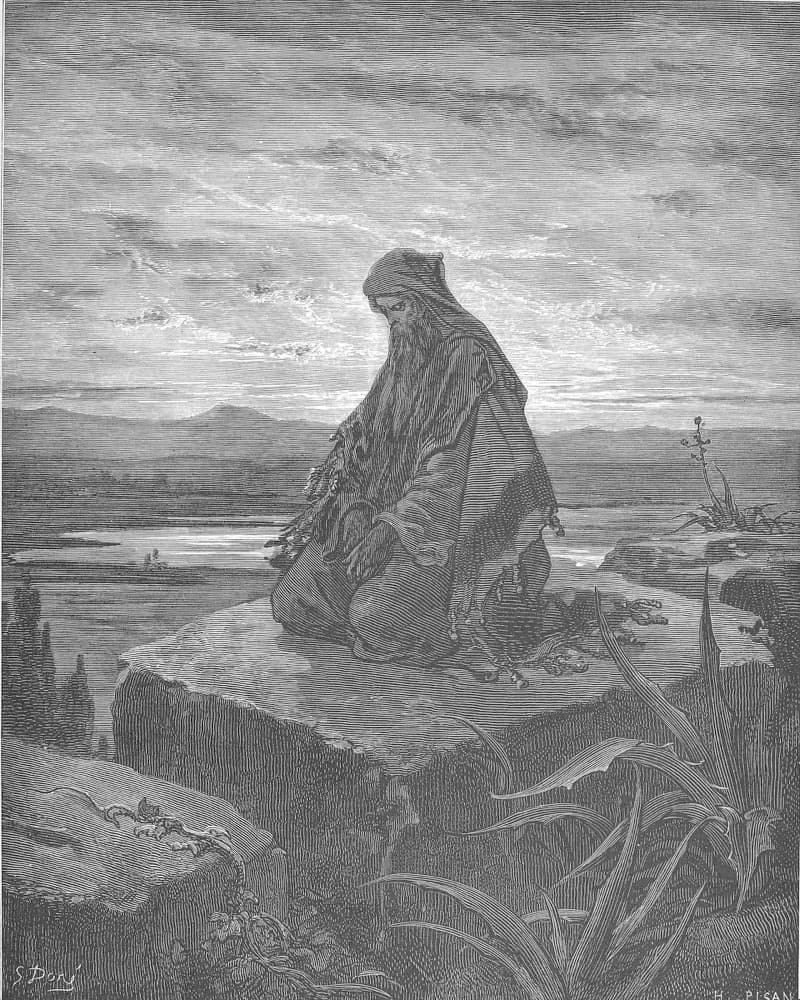
The Prophet Isaiah
How God commissions a prophet, every single time
The call
Isaiah, Jeremiah, Moses, Enoch, Lehi, Gideon, Peter and Joseph Smith were called in eight different centuries on three continents, and the accounts run through the same seven steps in the same order — including a step nobody would invent, in which the prophet argues that God has chosen wrongly. Understanding the sequence changes how the First Vision reads, and changes what an ordinary calling in a ward feels like.
31 min9 appearances
The pattern, in one sentence
God interrupts an ordinary task, names the person, states the assignment, receives an honest protest of inadequacy, answers the protest with His presence rather than with reassurance about the person, gives a token, and sends them into immediate opposition.
What counts as an instance
Stated before the evidence, so that the evidence is able to fail.
It interrupts something ordinary
Sheep, a fishing net, a farm, a plough, a threshing floor, a grove behind a house. Nobody in this pattern is called during an act of worship they had arranged.
The person is named
Not summoned generically. 'Moses, my son.' 'Joseph, this is My Beloved Son.' The naming precedes the assignment every time, and it is doing theological work.
There is a protest, and it is honest
The single most consistent element, and the one no institution would invent. Nearly every called prophet in scripture argues. The protests are specific and unflattering — a speech impediment, youth, sinfulness, unpopularity, low family rank.
The answer is presence, not flattery
God never responds by correcting the self-assessment. He does not say the prophet is more capable than he thinks. He says: I will be with thee. That substitution is the doctrine of the pattern.
The appearances
9 in the canonAnd Moses said unto God, Who am I, that I should go unto Pharaoh?… And he said, Certainly I will be with thee.
What recurs
Interrupted at work, named, commissioned, protests, answered with presence.
What is new here
The longest argument in the canon. Moses raises five separate objections across two chapters, and God answers each without withdrawing the call.
Track the objections: who am I, what is your name, they will not believe me, I am slow of speech, send someone else. Only the last provokes anger — and even then the call stands and Aaron is added. The pattern tolerates a great deal of resistance.
Where it lands
The pattern, opened to everyone
Section 4 is fifty-two words long, was given to a sixty-year-old farmer, and hands the entire commission structure to any person at all: 'If ye have desires to serve God ye are called to the work.' Not qualified — called. The qualifications listed afterwards are faith, hope, charity and an eye single, every one of them a disposition rather than a skill. The pattern's last move is to stop being about prophets.
Seven steps, in order
Stated before the evidence, so the evidence can fail to fit.
| # | Step | Example |
|---|---|---|
| 1 | An ordinary task is interrupted | Moses keeping Jethro's flock; Gideon threshing |
| 2 | The person is named | “Moses, my son”; “Joseph, this is My Beloved Son” |
| 3 | The scope is shown before the task | Moses shown every inhabitant of the earth |
| 4 | The assignment is stated | “Come now therefore, and I will send thee unto Pharaoh” |
| 5 | The person protests, specifically | “I am slow of speech”; “I am a child”; “I am the least” |
| 6 | God answers with presence and a token | “Certainly I will be with thee”; a coal; a touched mouth |
| 7 | Opposition arrives immediately | Satan in Moses 1:12; persecution in JS—H 1:22 |
Not every account contains all seven — Lehi's has no recorded protest, Peter's has no vision of the world — but no account reverses the order, and the two steps that appear in every single instance are the naming and the answer of presence.
Principle
A pattern is only worth anything if it could have failed. This one is stated in full before the passages, and the exceptions are listed rather than hidden.
The protest nobody would have invented
Eight men, one sentence, and the reason it is evidence rather than embarrassment.
If these accounts were written to establish authority, the protests would not be in them. An institution constructing a founding narrative does not include its founder telling God to send somebody else. And yet it is the most consistent element in the set.
The protest
Moses: “Who am I, that I should go unto Pharaoh?”
Moses: “I am slow of speech, and of a slow tongue.”
Gideon: “My family is poor… I am the least in my father's house.”
Isaiah: “I am a man of unclean lips.”
Jeremiah: “I cannot speak: for I am a child.”
Enoch: “I am but a lad, and all the people hate me.”
Peter: “Depart from me; for I am a sinful man.”
Amos: “I was no prophet, neither was I a prophet's son.”
The answer
“Certainly I will be with thee.”
“Who hath made man's mouth?… I will be with thy mouth.”
“Surely I will be with thee.”
“Thine iniquity is taken away, and thy sin purged.”
“Be not afraid of their faces: for I am with thee.”
“Open thy mouth, and it shall be filled.”
“Fear not; from henceforth thou shalt catch men.”
“The LORD took me as I followed the flock.”
Read the right-hand column on its own. Not one of those answers disputes the objection. God never tells Moses that his speech is fine, never tells Jeremiah he is older than he thinks, never tells Peter he is not a sinful man. The self-assessments are allowed to stand — and are made irrelevant by a different fact.
Principle
God does not answer inadequacy by disputing it. He answers it by attaching Himself to it.
This is the whole doctrine of the pattern, and it is the reason Ether 12:27 belongs beside these passages: the weakness is not removed, and grace is what makes weak things strong.
Isaiah 6, step by step
The cleanest instance in scripture, and the order of its parts.
Isaiah.
1In the year that king Uzziah died I saw also the Lord sitting upon a throne, high and lifted up, and his train filled the temple.
5Then said I, Woe is me! for I am undone; because I am a man of unclean lips, and I dwell in the midst of a people of unclean lips: for mine eyes have seen the King, the Lord of hosts.
6Then flew one of the seraphims unto me, having a live coal in his hand, which he had taken with the tongs from off the altar:
7And he laid it upon my mouth, and said, Lo, this hath touched thy lips; and thine iniquity is taken away, and thy sin purged.
8Also I heard the voice of the Lord, saying, Whom shall I send, and who will go for us? Then said I, Here am I; send me.
The sequence is the teaching. Isaiah does not volunteer in verse 5; he despairs. The question 'whom shall I send' is not asked until verse 8 — after the coal. He is made clean and then asked, in that order, and the offer he makes is possible only because of what was done to him in between.
And notice where the coal is applied. He objected with his lips; the altar touches his lips. In Jeremiah 1:9 the Lord touches Jeremiah's mouth, and Jeremiah's objection was that he could not speak. Enoch is told to open his mouth. The token in this pattern lands on the thing the person said was disqualifying.
To consider
- 01Isaiah's volunteering is conditioned entirely on being cleansed first. What does that imply about waiting to feel adequate before accepting an assignment?
- 02The coal came from the altar — that is, from the place of sacrifice. Why would the cleansing token come from there rather than anywhere else in the temple?
The First Vision as a call narrative
Reading Joseph Smith—History 1 against the sequence changes what stands out in it.
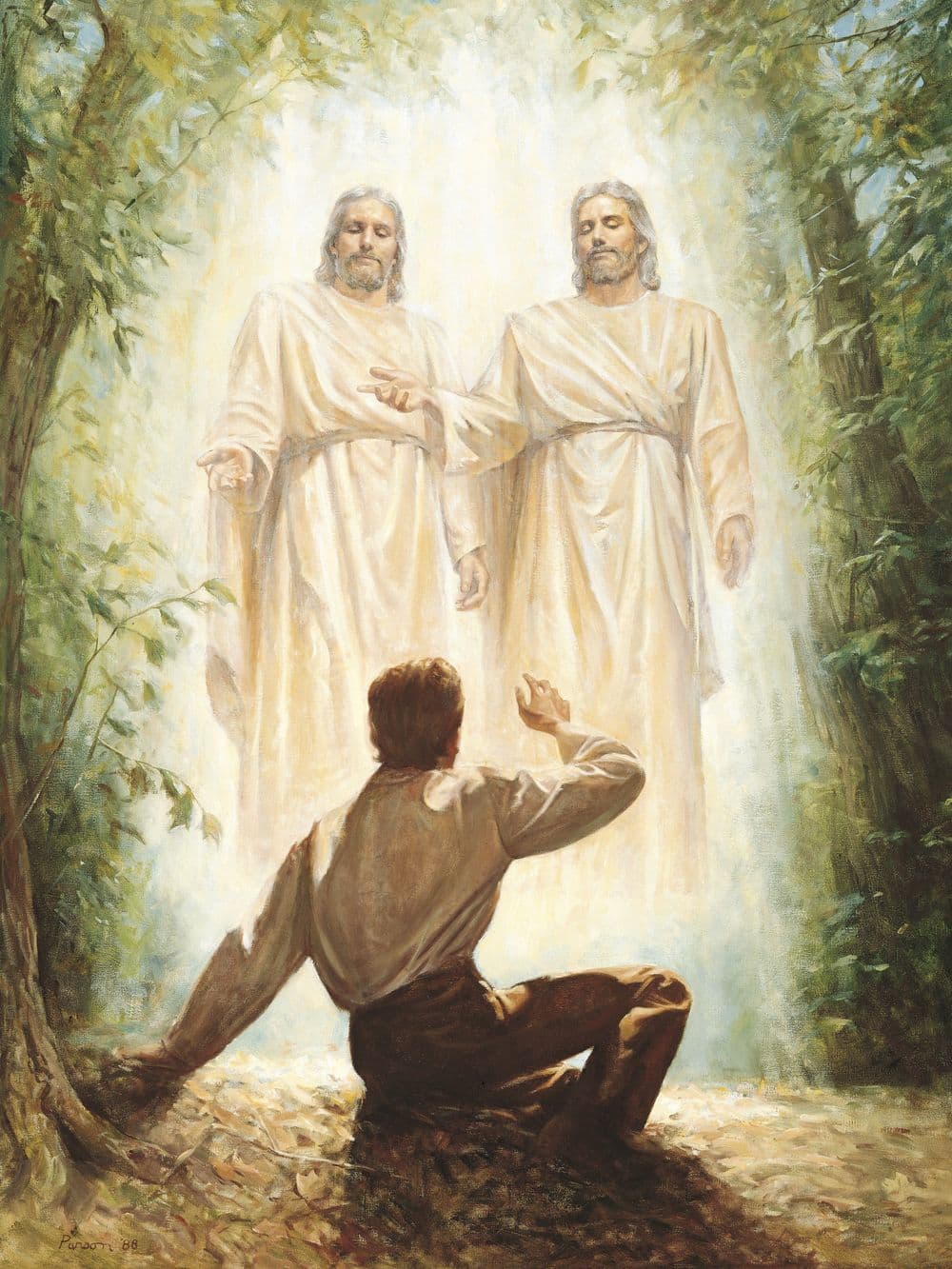
The grove, spring 1820. · JS—H 1:14–20
| Step | Where it appears | Detail |
|---|---|---|
| Ordinary setting | 1:14 | A wood near the family farm, on a clear morning, chosen for privacy |
| Opposition first | 1:15–16 | Seized upon by a power that bound his tongue — as in Moses 1:12–22 |
| Light | 1:16–17 | A pillar of light above the brightness of the sun, descending gradually |
| Named | 1:17 | “Calling me by name” — the Father speaks first, and speaks his name |
| Assignment | 1:19–20 | Initially only a prohibition: join none of them |
| Weakness acknowledged | 1:28–29 | “I frequently fell into many foolish errors… I have often felt condemned” |
| Immediate opposition | 1:21–22 | A minister treats it with contempt; “a great deal of prejudice against me” |
Two details stand out once the pattern is in view. First, the adversary arrives before God does, which is the Moses 1 order and not the order a fabricator would choose. Second, Joseph is told what not to do before he is told what to do — the call in 1820 contains no assignment at all beyond a prohibition, and the actual work is not given for another three and a half years.
And then it stops being about prophets
Section 4, and what the pattern is doing in a ward.
3Therefore, if ye have desires to serve God ye are called to the work;
5And faith, hope, charity and love, with an eye single to the glory of God, qualify him for the work.
6Remember faith, virtue, knowledge, temperance, patience, brotherly kindness, godliness, charity, humility, diligence.
Every item in verse 5 and verse 6 is a disposition. Not one is an ability. The revelation was given to Joseph Smith Sr., who was sixty years old, had failed at farming and business repeatedly, and had no standing of any kind — and it says that wanting to serve is the qualification and the rest is character.
The pattern, applied
- D&C 4:3The threshold is desire, not competence. This is the sentence that opens the whole sequence to ordinary people.
- Ether 12:27Weakness is given, not permitted — and it is not removed on the way to being made strong.
- 1 Corinthians 1:27God chooses the foolish and weak things deliberately, and Paul says why: so that no flesh should glory.
- D&C 121:34–36Many are called and few chosen, with the reasons given plainly. The call is the easy part.
- Moroni 7:33“If ye have faith in me ye shall have power to do whatsoever thing is expedient in me.”
One last observation. Every person in this study was right about themselves. Moses did have a speech problem. Jeremiah was young. Peter was a sinful man. Enoch was unpopular. The pattern does not work by making people wrong about their limitations; it works by making the limitation the wrong subject. The question in every one of these scenes stops being 'is this person adequate' and becomes 'who is going with them' — and the answer to that has never changed.
What the pattern holds
God calls people at ordinary work, names them before He assigns them, and shows them the scope before the task.
The protest of inadequacy is a normal, expected, almost universal part of a genuine call — not a sign that the call is mistaken.
God answers inadequacy with His presence rather than with reassurance about the person's ability.
“Certainly I will be with thee” is the answer to “Who am I?” — a change of subject, and the only sufficient one.
Asking to be excused is a different act from admitting you are not able, and scripture treats it differently.
Opposition arriving immediately after a call is part of the pattern, not evidence against the call.
Moses 1:12–22 · JS—History 1:21–22 · 1 Nephi 1:19–20
What this will not carry
- The sequence is a description of what the accounts contain, not a test anyone should apply to their own experience to validate it. A call that lacks a vision is not thereby suspect.
- Lehi's account has no protest and Peter's has no vision of the world. The pattern is a strong tendency, not a formula, and saying otherwise would require ignoring two of the instances collected here.
- Foreordination in Jeremiah 1:5 and Alma 13:3 concerns assignment, not salvation, and does not imply that anyone's outcome is fixed. Alma 13:3 explicitly grounds it in faith and good works.
- The First Vision accounts differ in emphasis. Presenting the 1838 account as though it were the only one is a disservice; the Gospel Topics essay treats the differences openly and so should any teacher.
Check your reading
4 questions01How does God answer Moses's question, “Who am I, that I should go unto Pharaoh?”
02In Isaiah 6, when does Isaiah volunteer?
03Which of Moses's objections finally provoked the anger of the Lord?
04According to D&C 4:3, what qualifies a person to be called to the work?
Where to go next
Sources
- “First Vision Accounts” — Gospel Topics Essays, churchofjesuschrist.org
- “Call, Called of God, Calling” — Guide to the Scriptures, churchofjesuschrist.org
- Old Testament Student Manual: 1 Kings–Malachi — Church Educational System, on Isaiah 6 and Jeremiah 1
- Doctrine and Covenants 4 — Given to Joseph Smith Sr., February 1829