Library / Doctrine and Covenants
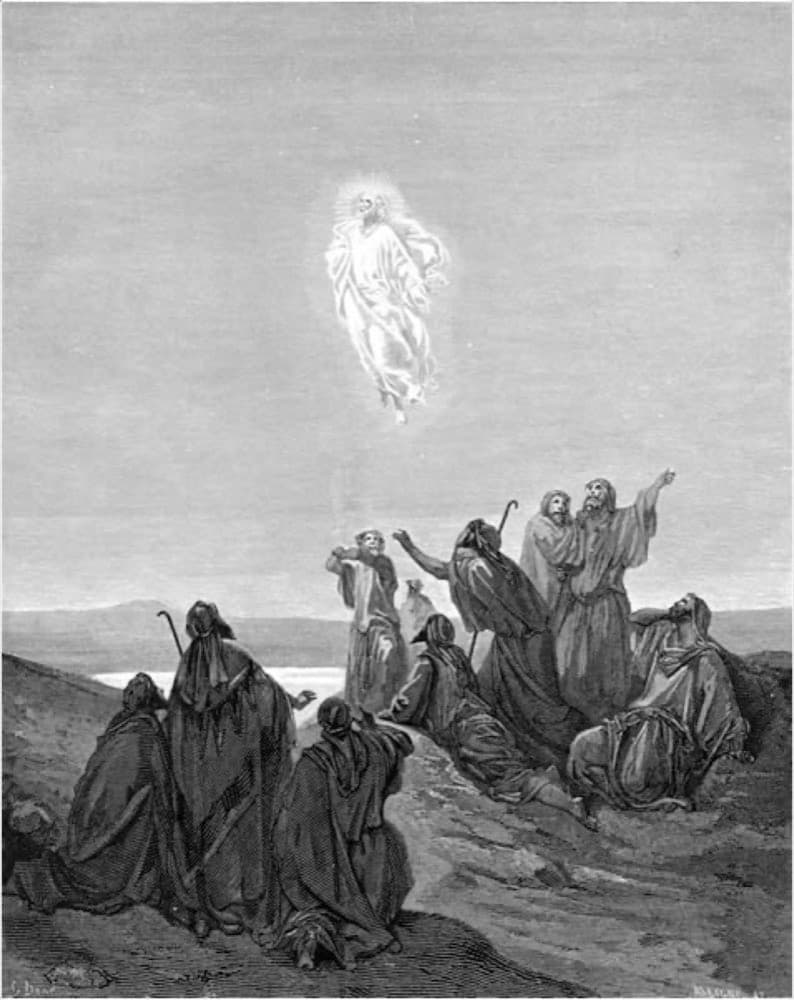
The Ascension
Doctrine and Covenants
The Vision
Doctrine and Covenants 76, and the end of a two-destination heaven
D&C 76; 1 Corinthians 15:40–42; D&C 88:20–2450 min4 sections
Two men translating a single verse of John are shown the structure of the next life. The result dismantled the heaven-or-hell binary of nineteenth-century Christianity, and some early Saints could not accept it.
- Author
- Joseph Smith and Sidney Rigdon, in vision
- Date
- 16 February 1832
- Place
- The John Johnson home, Hiram, Ohio, with perhaps a dozen men in the room
- Audience
- A Church three years old, most of whose members had been raised on a two-destination afterlife
- Genre
- Vision report, written in the first person plural
By the end you should be able to
- Describe how the vision arose and what the two men were doing at the time.
- Name the three degrees and the biblical passage that supplied the vocabulary.
- Explain what makes the telestial glory the most theologically startling part of the vision.
- State accurately who the sons of perdition are, and how narrow the category is.
One verse, and a room full of witnesses
Joseph Smith and Sidney Rigdon were working through the Gospel of John for the inspired translation. They reached John 5:29 — the resurrection of life and the resurrection of damnation — and stopped. "It appeared self-evident," Joseph later wrote, that if the term heaven meant one place, then more than one kingdom must be intended, since people are so plainly different from one another.
15For while we were doing the work of translation, which the Lord had appointed unto us, we came to the twenty-ninth verse of the fifth chapter of John...
18Now this caused us to marvel, for it was given us of the Spirit.
19And while we meditated upon these things, the Lord touched the eyes of our understanding and they were opened, and the glory of the Lord shone round about.
The sequence is worth noticing: work, then a question, then marvelling, then meditation, then vision. Almost every major revelation of the Restoration follows this shape — D&C 138 came from President Joseph F. Smith pondering 1 Peter; D&C 110 came after a temple dedication; the First Vision came after reading James 1:5.
There were others present. Philo Dibble, who was in the room, later described watching the two men alternate — one saying "I see the same," the other continuing — for over an hour. The vision was not private, even if only two men saw it.
"This is the testimony, last of all"
22And now, after the many testimonies which have been given of him, this is the testimony, last of all, which we give of him: That he lives!
23For we saw him, even on the right hand of God; and we heard the voice bearing record that he is the Only Begotten of the Father—
24That by him, and through him, and of him, the worlds are and were created, and the inhabitants thereof are begotten sons and daughters unto God.
Verse 24 contains a doctrine that most Christian traditions do not hold and that Latter-day Saints sometimes state without noticing how large it is: worlds, plural, whose inhabitants are also begotten sons and daughters unto God. Moses 1:33–35 says the same. Whatever the Atonement is in this theology, its reach is not confined to one planet.
Three glories
Sun, moon and stars — Paul's figures, given a doctrinal reading in the vision of February 1832.
The vocabulary comes from Paul. 1 Corinthians 15:40–41 speaks of celestial and terrestrial bodies and compares the glory of the sun, the moon and the stars. The JST of that verse adds a third term — telestial — which appears nowhere in Greek and is, in effect, a coinage of the Restoration.
| Degree | Image | Who inherits it | Key verses |
|---|---|---|---|
| Celestial | The glory of the sun | Those who receive the testimony of Jesus, are baptised, keep the commandments, are sealed by the Holy Spirit of promise, and overcome by faith | 76:50–70 |
| Terrestrial | The glory of the moon | The honourable who were blinded by the craftiness of men; those who died without law; those not valiant in the testimony of Jesus | 76:71–80 |
| Telestial | The glory of the stars, differing from one another | Those who received not the gospel, nor the testimony of Jesus; who suffer the wrath of God until the last resurrection | 76:81–90, 98–112 |
| Perdition | No glory | Those who knew the power of God, were made partakers of it, and then denied it — "having denied the Holy Spirit after having received it" | 76:31–38, 43–44 |
89And thus we saw, in the heavenly vision, the glory of the telestial, which surpasses all understanding;
109But behold, and lo, we saw the glory and the inhabitants of the telestial world, that they were as innumerable as the stars in the firmament of heaven, or as the sand upon the seashore...
Verse 89 is the sentence that broke the old map. The lowest degree of glory — the destination of liars, sorcerers, adulterers and those who received not the gospel (76:103) — "surpasses all understanding." There is no hell in this vision for the overwhelming majority of the human race. What there is, instead, is a graded universe in which nearly everyone receives more than they deserve.
Sons of perdition, precisely
31Thus saith the Lord concerning all those who know my power, and have been made partakers thereof, and suffered themselves through the power of the devil to be overcome, and to deny the truth and defy my power—
35Having denied the Holy Spirit after having received it, and having denied the Only Begotten Son of the Father, having crucified him unto themselves and put him to an open shame.
The category is defined by a very high bar: knowing God's power, having partaken of it, and then denying it — crucifying Him afresh with full knowledge. Joseph Smith taught that a person must know God as one knows the sun at noonday before they can sin against Him in this way. Whatever else this doctrine is, it is not a description of people who leave the Church, or who doubt, or who sin badly.
It is also the only place the vision reserves for outer darkness. Everything else in D&C 76 is a kingdom of glory. That imbalance — the narrowest possible damnation, and three heavens for everyone else — is the vision's actual shape, and it is the opposite of how the doctrine is often summarised.
One further note: verse 114 records that the Lord commanded them not to write "the end of the vision." What is in section 76 is described by the text itself as partial.
What this lesson holds
Revelation typically comes to those already at work on a question.
There are degrees of glory in the resurrection, corresponding to what a person has received and become.
Almost everyone who has ever lived will inherit a kingdom of glory.
The Atonement's reach extends to worlds beyond this one.
Check your reading
4 questions01What were Joseph Smith and Sidney Rigdon doing when the vision came?
02Where does the vocabulary of celestial and terrestrial come from?
03What does D&C 76:89 say about the telestial glory?
04Who are the sons of perdition, as D&C 76 defines them?
Where to go next
Sources
- D&C 76; 1 Corinthians 15 — The primary texts.
- Revelations in Context, "The Vision" — Church History Department, on the reception of section 76
- Doctrine and Covenants Student Manual — Church Educational System, chapter on section 76