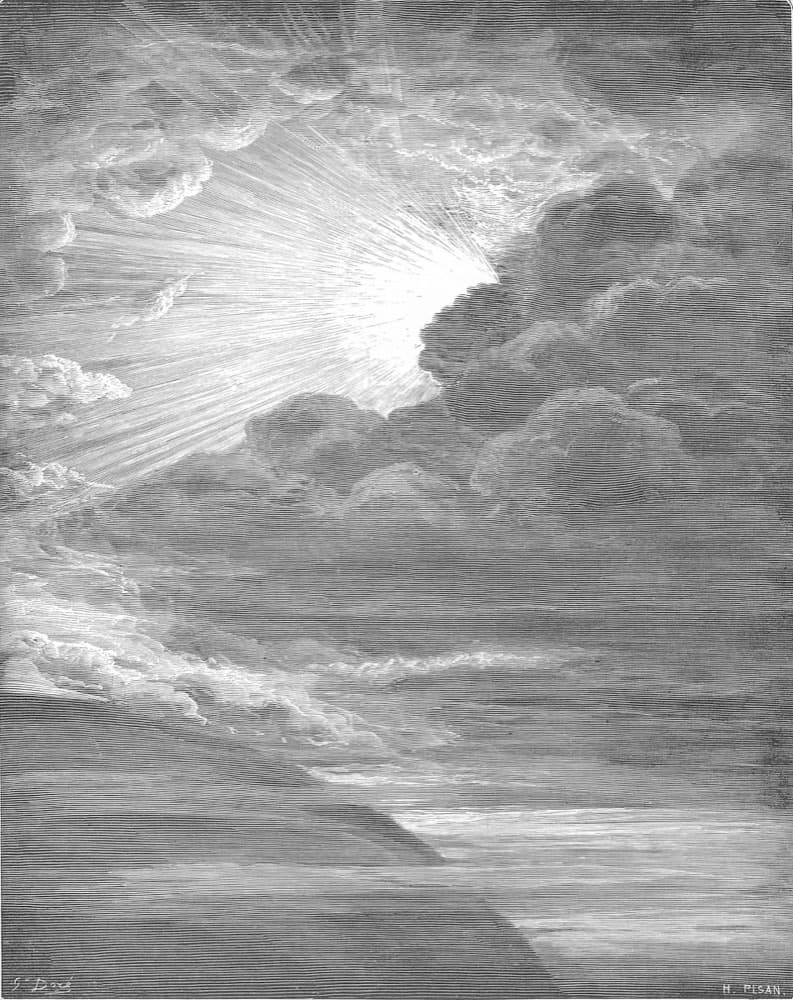
The Creation of Light
Old Testament
In the Beginning
Genesis 1–2 read with Moses and Abraham open beside it
Genesis 1–2; Moses 2–3; Abraham 4–555 min4 sections
Four accounts of one creation, and a Hebrew text that never says God made the world out of nothing. What Genesis actually claims, what the Restoration adds, and why "organised" rather than "created from nothing" changes the doctrine of matter, spirit, and humankind.
- Author
- Attributed to Moses; the Restoration supplies two further accounts through Joseph Smith
- Date
- The Genesis text as we have it reached its present form during or before the exile; Moses 2–3 was received in 1830, Abraham 4–5 published in 1842
- Place
- —
- Language
- Biblical Hebrew
- Genre
- Structured prose narrative with strong liturgical patterning
By the end you should be able to
- Read Genesis 1:1–2 in Hebrew well enough to see what it does and does not claim about origins.
- Explain the structure of the six days as forming and then filling.
- State what the Restoration adds through Moses 3:5 and Abraham 4, and what doctrinal work each addition does.
- Say what tselem and demut mean, and what follows from being made in the image of God.
The first three verses
1In the beginning God created the heaven and the earth.
2And the earth was without form, and void; and darkness was upon the face of the deep. And the Spirit of God moved upon the face of the waters.
3And God said, Let there be light: and there was light.
Genesis 1:1–2, word by word
Put together, the Hebrew of the first two verses describes God beginning to work on something rather than conjuring something from nothing. That reading is not a Latter-day Saint innovation — it is the reading most Hebraists give — but it happens to be exactly what the Restoration teaches.
“The elements are eternal, and spirit and element, inseparably connected, receive a fulness of joy.”
Forming, then filling
The six days are two sets of three, and the pattern is the argument.
| Days 1–3: forming what was formless (tōhû) | Days 4–6: filling what was empty (bōhû) |
|---|---|
| Day 1 — light separated from darkness | Day 4 — sun, moon and stars to rule day and night |
| Day 2 — waters above separated from waters below | Day 5 — birds for the sky, fish for the sea |
| Day 3 — dry land separated from sea; plants | Day 6 — land animals, and humankind; plants given for food |
Once you see it, the chapter stops being a list and becomes an argument. Days one to three build the containers; days four to six supply the contents. The seventh day then has nothing to make, and is instead blessed and sanctified — the first thing in scripture called holy.
Four accounts, and what each adds
Genesis 1–2
God creates by speaking; the days are days.
Two accounts side by side: 1:1–2:3 is ordered and cosmic; 2:4–25 is intimate and garden-centred.
Humankind made in God's image, male and female.
Moses 2–3 (1830)
Follows Genesis closely, with the Father speaking and creating "by mine Only Begotten" (Moses 2:1).
Adds Moses 3:5: all things were created spiritually before they were naturally upon the earth.
Frames the whole account as revelation given to Moses.
Abraham 4–5 (1842)
"The Gods organized and formed the heavens and the earth" (Abraham 4:1).
Replaces day with time — "the second time that they called night and day" (4:8).
The Gods watch and wait: "they will obey" (4:18).
The temple
Latter-day Saints encounter the creation account again in the endowment, presented as a pattern to be entered rather than a chronicle to be dated.
Abraham 4 does two things at once. Its plural — the Gods — takes the Hebrew ʾĕlōhîm and the "let us make" of Genesis 1:26 at face value, describing a council. And its substitution of time for day removes the pressure to read the six days as twenty-four-hour periods, a question the Church has deliberately not settled.
Moses 3:5 is the addition most worth sitting with: "For I, the Lord God, created all things, of which I have spoken, spiritually, before they were naturally upon the face of the earth." It supplies a category — a prior spiritual creation — that makes premortal existence a structural feature of the plan rather than an isolated proof text.
"In our image, after our likeness"
26And God said, Let us make man in our image, after our likeness: and let them have dominion over the fish of the sea, and over the fowl of the air, and over the cattle, and over all the earth, and over every creeping thing that creepeth upon the earth.
27So God created man in his own image, in the image of God created he him; male and female created he them.
Latter-day Saint doctrine reads the image literally and relationally: God has a body of flesh and bones (D&C 130:22), human beings are His offspring (Acts 17:28–29), and the resemblance is of family rather than of metaphor. The Family Proclamation states it as doctrine — each person is "a beloved spirit son or daughter of heavenly parents."
Note also the last clause of verse 27. Male and female are both, and equally, the image. Whatever else the chapter is doing, it is not ranking them.
7And the Lord God formed man of the dust of the ground, and breathed into his nostrils the breath of life; and man became a living soul.
What this lesson holds
God created the heavens and the earth by organising eternal materials, not by producing them from nothing.
There was a spiritual creation before the physical one.
Every human being — male and female alike — bears the image and likeness of God, and is His child.
Genesis 1:26–27 · Genesis 5:1–3 · Acts 17:28–29 · Moses 6:8–9
The Sabbath is holy by God's blessing, before any priesthood, temple or law existed.
Check your reading
5 questions01What does the Hebrew verb bārāʾ specify about how God created?
02How is the six-day account structured?
03What does Abraham 4 substitute for the word "day"?
04What does Moses 3:5 add to the Genesis account?
05In Genesis 2:7, what happens when God breathes into the man's nostrils?
Where to go next
Sources
- Genesis 1–2; Moses 2–3; Abraham 4–5 — The primary texts.
- First Presidency, "The Origin of Man" — Improvement Era, November 1909 — affirms humankind as God's offspring; settles no scientific question
- Gospel Topics, "Creation"
- Old Testament Student Manual, Genesis–2 Samuel — Church Educational System