Topics / Scripture
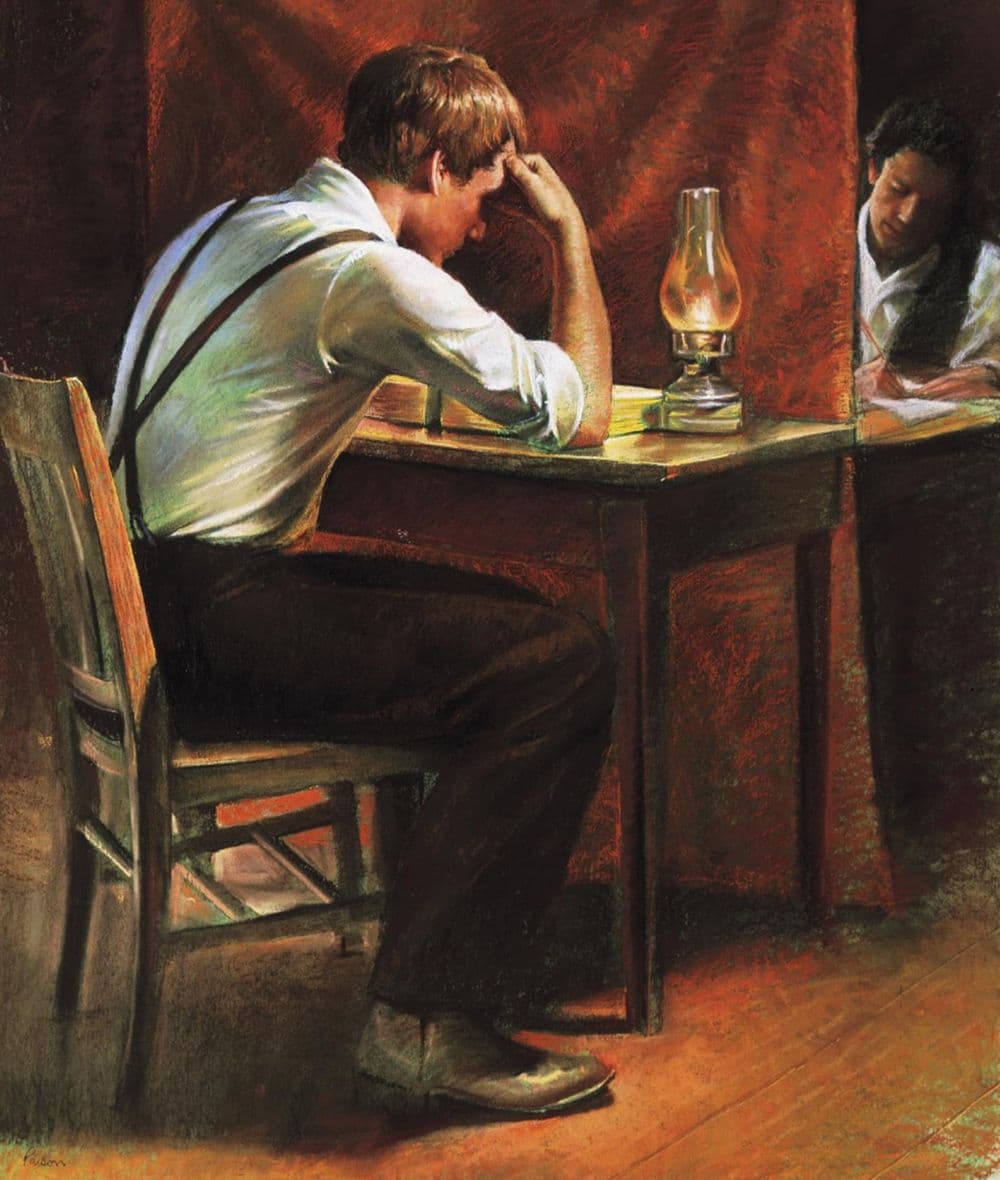
Joseph Smith Translating the Book of Mormon · JS—H 1:34–35, 71
What it is, and what to call it
The Joseph Smith Translation
Not a translation in the ordinary sense, and pretending otherwise invites a fair objection. A prophetic revision of the Bible, made without manuscripts, some of it restoring, some of it clarifying, some of it new revelation written into the text.
18 min2 sections
What it is
Beginning in June 1830 and working until 1833 with substantial later revision, Joseph Smith went through the Bible making changes — some a single word, some entire chapters. He had no ancient manuscripts, no Hebrew or Greek at the time, and no textual apparatus. What he had was a King James Bible and a scribe.
| Kind | Example |
|---|---|
| Restoration of lost text | Moses 1 — an entire chapter with no biblical parallel |
| Clarification of an obscure passage | Matthew 6:22 JST, resolving the 'single eye' figure |
| Harmonisation | Aligning parallel Gospel accounts that had drifted |
| Inspired commentary written into the text | Many small changes that read as explanation rather than as recovered wording |
How to use it
- Read it as apparatus, the way you would read a good study Bible's notes — informative, and not the base text.
- Do not assume every change recovers original wording; the Church's own Bible Dictionary does not make that claim.
- Do not dismiss it either: Moses 1 and Moses 7 are among the most theologically dense chapters in the canon, and neither exists elsewhere.
- Notice which passages Joseph revised most heavily — Genesis, Matthew, Romans — because the pattern tells you what he was working on.
- Remember the revision was never finished. He was still making changes in Nauvoo.
Principle
The JST is a prophetic revision rather than a manuscript translation, and calling it what it is makes it more defensible rather than less.
What this topic holds
The JST was produced by revelation rather than from manuscripts, and the Church's own reference works say so.
The revision was the occasion for major revelations, including D&C 76, which came while revising John 5:29.
Check your reading
3 questions01What did Joseph Smith work from when producing the JST?
02Which two portions of the JST are canonised?
03What major revelation came out of the Bible revision?
Where to go next
Sources