Topics / Scripture
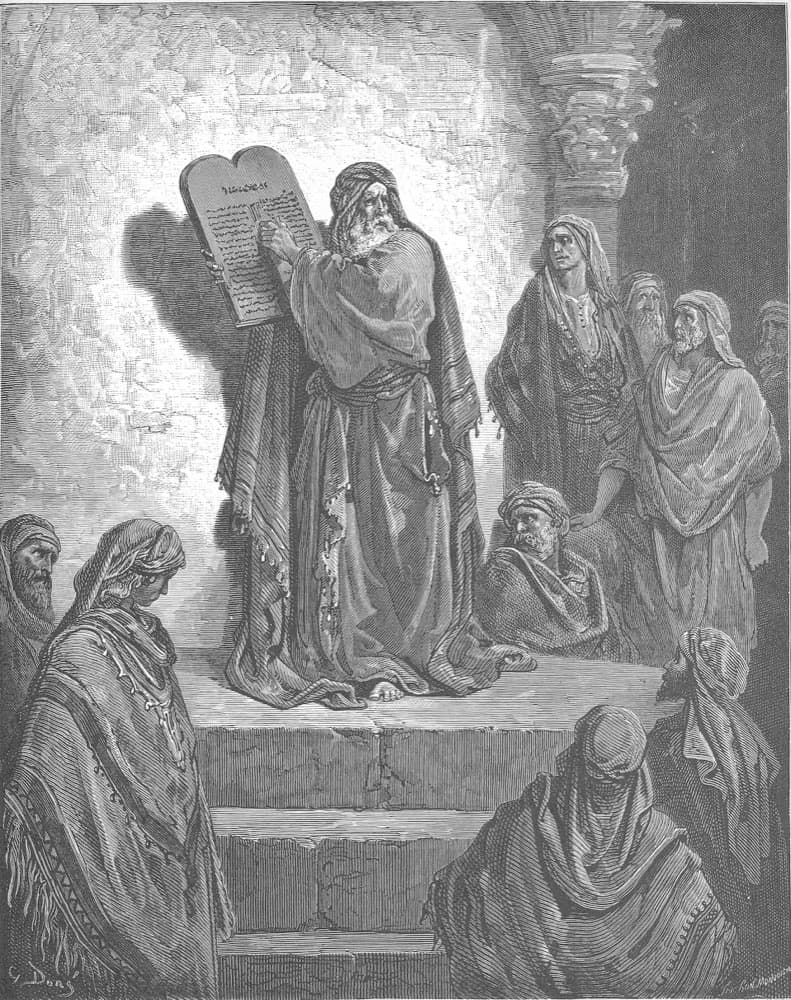
Ezra Reads the Law to the People
Feasting, not skimming
Scripture Study
Scripture on how to read scripture: what it is for, what it does to the reader, and the specific ways of reading that the texts themselves recommend. Nephi's verb is 'feast,' which assumes a table, an appetite and time.
20 min2 sections
What it is for
16All scripture is given by inspiration of God, and is profitable for doctrine, for reproof, for correction, for instruction in righteousness:
17That the man of God may be perfect, throughly furnished unto all good works.
King James renders it “given by inspiration of God”
A compound that appears only here in the New Testament. Not 'inspiring' but 'breathed out by God' — which locates the authority in the origin rather than in the effect on the reader.
Full lexicon entry →
Four uses are named, and three of them involve being told you are wrong. That is worth registering by anyone whose study consists mainly of finding verses that confirm what they already think.
Four ways of reading the texts recommend
A Hebrew figure in which the second half mirrors the first, so the turning point sits at the centre. In Alma 36 the centre is the moment he calls on Christ — and the relief arrives at exactly that verse.
| Verb | What it asks | Where |
|---|---|---|
| Search | Sustained, deliberate looking — the word implies effort | John 5:39; 3 Nephi 23:1 |
| Liken | Reading yourself into the text on purpose, 'for our profit and learning' | 1 Nephi 19:23 |
| Ponder | Turning it over slowly enough for something to happen | D&C 138:1–11; Moroni 10:3 |
| Feast | Sustained enjoyment, with appetite, over time | 2 Nephi 32:3 |
23And I did read many things unto them which were written in the books of Moses; but that I might more fully persuade them to believe in the Lord their Redeemer I did read unto them that which was written by the prophet Isaiah; for I did liken all scriptures unto us, that it might be for our profit and learning.
Principle
The scriptures are meant to read the reader, which is why three of the four uses Paul names involve correction.
What this topic holds
Scripture is God-breathed, and its stated uses are doctrine, reproof, correction and instruction.
Likening is a deliberate practice that sits on top of the historical sense rather than replacing it.
Check your reading
3 questions01What does theopneustos literally mean?
02What is Nephi's verb in 2 Nephi 32:3?
03What is the limit on likening?
Where to go next
Sources
- Gospel Topics, "Scripture Study"
- 2 Timothy 3; 1 Nephi 19; 2 Nephi 32 — The primary texts.