Topics / Scripture
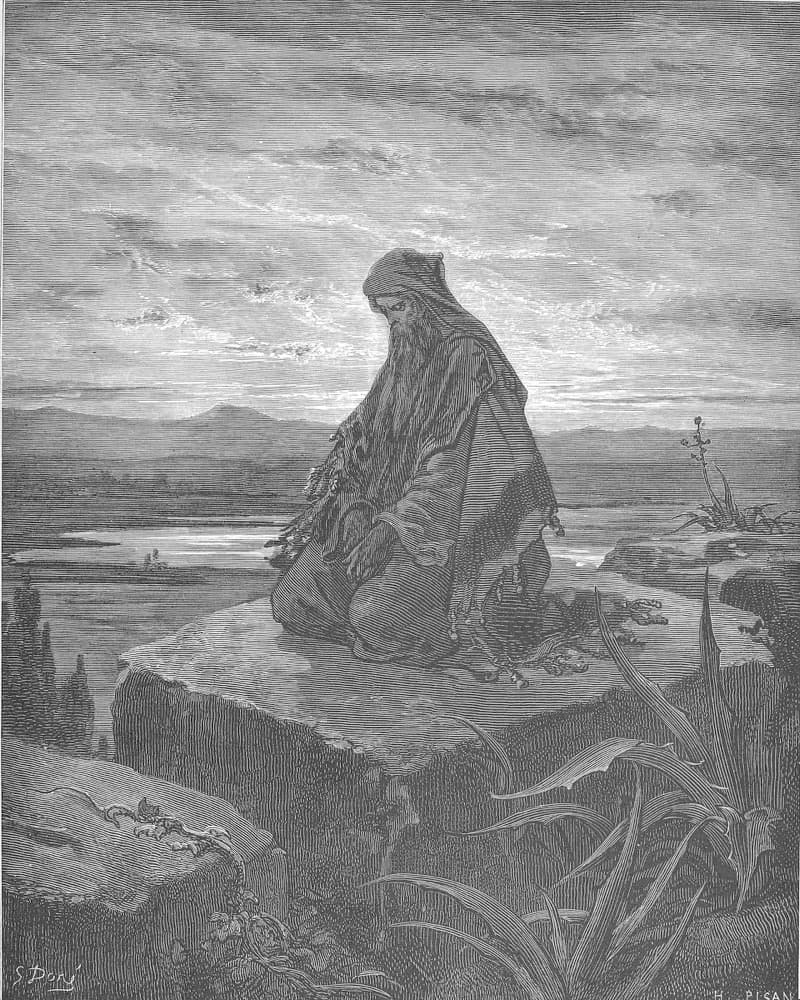
The Prophet Isaiah
Why it is hard, and what actually helps
Reading Isaiah
Nephi says his people did not delight in Isaiah, and then quotes him for thirteen chapters anyway. This is a practical guide: the four things that make Isaiah difficult, and the four keys that make him readable.
22 min2 sections
Why it is hard
- It is poetry, and Hebrew poetry works by parallelism rather than by rhyme — a line says something, and the next line says it again differently. Reading the second line as new information is the commonest mistake.
- It assumes a political situation eighth-century Judah knew and we do not: Assyria, Ahaz, Hezekiah, the Syro-Ephraimite crisis.
- It moves between horizons without warning — Isaiah's own day, the Babylonian exile, the Messiah, the last days — sometimes within a verse.
- The King James rendering is beautiful and often obscure, and it flattens Hebrew wordplay that carries the argument.
1Now I, Nephi, do speak somewhat concerning the words which I have written, which have been spoken by the mouth of Isaiah. For behold, Isaiah spake many things which were hard for many of my people to understand…
4…but I give unto you a prophecy, according to the spirit which is in me; wherefore I shall prophesy according to the plainness which hath been with me from the time that I came out from Jerusalem with my father.
5Yea, and my soul delighteth in the words of Isaiah… for I came out from Jerusalem, and mine eyes hath beheld the things of the Jews, and I know that the Jews do understand the things of the prophets.
Four keys
Four kinds, with examples. Reading the second line as new information is the commonest mistake made with the Psalms, Proverbs and Isaiah.
| Key | What it does | Source |
|---|---|---|
| Know the manner of prophesying among the Jews | Learn the conventions: parallelism, personification, dual fulfilment, the use of place names as types | 2 Nephi 25:1, 5 |
| The spirit of prophecy | 'The testimony of Jesus is the spirit of prophecy' — read looking for Christ, because that is what the prophet was doing | Revelation 19:10; 2 Nephi 25:4 |
| Liken it | Read it as addressed to you, on top of its original address | 1 Nephi 19:23 |
| Search it | Use the Book of Mormon's own commentary — Nephi, Jacob and Abinadi all expound Isaiah passages at length | 3 Nephi 23:1; Mosiah 14–15 |
Principle
Isaiah becomes readable when you learn the conventions of Hebrew poetry and read looking for Christ, which is what the prophet was doing.
What this topic holds
Hebrew poetry works by parallelism; the second line restates the first rather than adding to it.
The Savior commanded that Isaiah's words be searched, and said they are great.
Check your reading
3 questions01What is the commonest mistake in reading Hebrew poetry?
02What does Nephi give as the key to understanding Isaiah?
03What is the scholarly question about Isaiah 40–66?
Where to go next
Sources
- 2 Nephi 25; 3 Nephi 23 — The Book of Mormon's own instructions for reading Isaiah.
- Old Testament Student Manual: 1 Kings–Malachi