Topics / Plan of Salvation
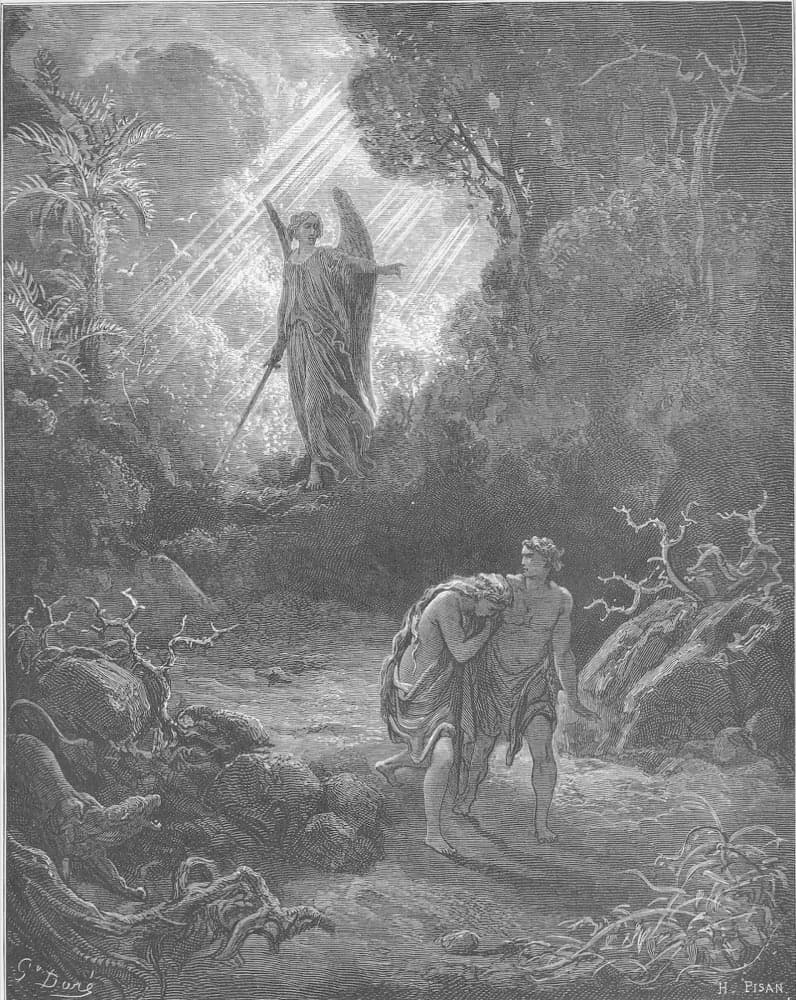
Adam and Eve Driven out of Eden
A step down, and forward
The Fall
The doctrine where Latter-day Saint theology parts most sharply from the rest of Christendom. The Fall introduced death and separation, and it was also necessary, foreseen, and — in Lehi's account — the reason joy is possible at all.
22 min2 sections
The difference
Much of Christendom
The Fall as catastrophe.
Guilt inherited by all Adam's descendants.
Infants born needing baptism for that inherited guilt.
Eve's role read as culpability.
The Restoration
The Fall as a necessary step, foreseen and provided for.
'Men will be punished for their own sins, and not for Adam's transgression.'
Little children whole, and baptism before accountability condemned in the strongest terms in the canon.
Eve's choice honoured — 'were it not for our transgression we never should have had seed.'
22And now, behold, if Adam had not transgressed he would not have fallen, but he would have remained in the garden of Eden. And all things which were created must have remained in the same state in which they were after they were created; and they must have remained forever, and had no end.
23And they would have had no children; wherefore they would have remained in a state of innocence, having no joy, for they knew no misery; doing no good, for they knew no sin.
25Adam fell that men might be; and men are, that they might have joy.
The two deaths, and the two remedies
The Fall introduced two separations. One is undone for everyone without condition; the other requires a response. Most confusion about grace and works comes from applying a statement about one to the other.
| What the Fall introduced | How the Atonement answers it | |
|---|---|---|
| Physical death | The body separated from the spirit | The resurrection — unconditional, universal (1 Corinthians 15:22) |
| Spiritual death | The person separated from the presence of God | Conditional on faith, repentance and covenant (Helaman 14:17–18) |
Keeping the two deaths distinct is what makes the whole system legible. One is undone for everyone regardless of anything they do; the other requires a response. Most confusion about grace and works in Latter-day Saint teaching comes from applying a statement about one to the other.
Principle
The Fall was necessary, foreseen and provided for, and no one inherits guilt for it.
2 Nephi 2:25 · Articles of Faith 1:2 · Moroni 8:8 · Moses 6:53–54
What this topic holds
Adam fell that men might be, and men are that they might have joy.
Little children are whole and not capable of committing sin; baptising them is condemned outright.
Check your reading
3 questions01According to 2 Nephi 2:23, what would have been true if there had been no Fall?
02What are the two deaths introduced by the Fall?
03What does Moroni 8 say about baptising little children?
Where to go next
Sources
- Gospel Topics, "Fall of Adam and Eve"
- 2 Nephi 2; Moses 4–6; Moroni 8 — The primary texts.