Topics / Covenants and Ordinances
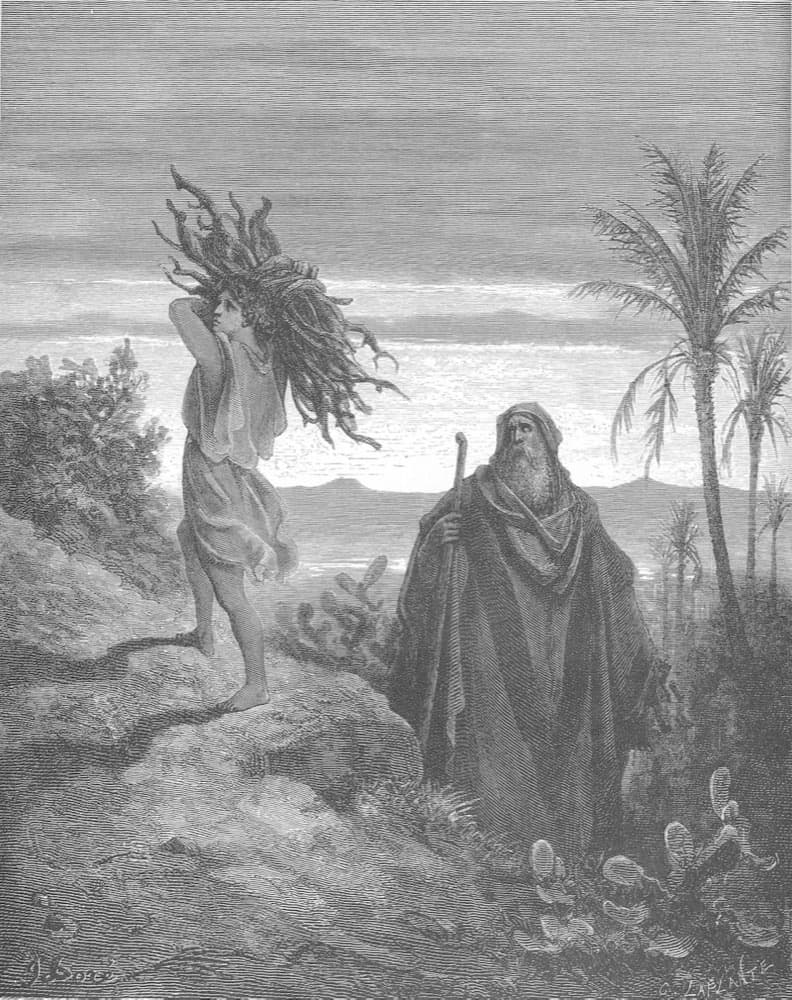
The Testing of Abraham's Faith
The form God's dealings take
Covenants
Almost everything God does in scripture, He does by covenant. The Hebrew and Greek terms carry different weights — one a treaty between parties, the other closer to a will — and both are in play in what Christians call the New Testament.
22 min2 sections
Two words, two pictures
A treaty is between equals or near-equals; a will is dictated by one party and received by another. Both pictures are true of God's covenants, and holding them together prevents two opposite errors — treating a covenant as a negotiation, or treating it as something requiring nothing.
The shape of a covenant
Faith, repentance, baptism, the gift of the Holy Ghost, the temple, and enduring — with the gate marked, and the weekly loop back through the sacrament.
| Element | Example: baptism (Mosiah 18:8–10) |
|---|---|
| Who initiates | God, always. Nobody in scripture proposes terms to Him. |
| What is promised | The Spirit poured out; redemption; a place among His people |
| What is required | Bear one another's burdens, mourn with those that mourn, stand as witnesses at all times |
| What the sign is | Immersion, performed by authority |
| How it is renewed | The sacrament, weekly |
The major covenants
- Genesis 9:8–17Noah — a covenant with all flesh, with a sign in the sky and no conditions attached.
- Genesis 17:1–8; Abraham 2:9–11Abraham — land, seed, and blessing to all nations, with the priesthood named as the mechanism.
- Exodus 19:5–6Sinai — 'a peculiar treasure… a kingdom of priests,' explicitly conditional: 'if ye will obey my voice.'
- 2 Samuel 7:12–16David — a throne established forever, which the messianic hope then hangs on.
- Jeremiah 31:31–34The new covenant, written on hearts rather than on stone.
- D&C 132:7The Restoration's statement of what makes any covenant last past death.
Principle
God initiates every covenant, states both the promises and the conditions, and binds Himself to the promises.
D&C 82:10 is the plainest version: 'I, the Lord, am bound when ye do what I say; but when ye do not what I say, ye have no promise.' The binding runs in both directions, which is what makes a covenant different from a command.
What this topic holds
Covenants are cut, not merely agreed — the imagery is of an oath enacted at cost.
A covenant binds God to His promises as it binds the person to the conditions.
Check your reading
3 questions01What does Hebrew say instead of 'make a covenant'?
02Why are the two halves of the Bible called Testaments?
03What does D&C 82:10 say?
Where to go next
Sources
- Bible Dictionary, "Covenant"
- Genesis 15, 17; Exodus 19; Jeremiah 31; D&C 82, 132 — The primary texts.