Topics / Discipleship
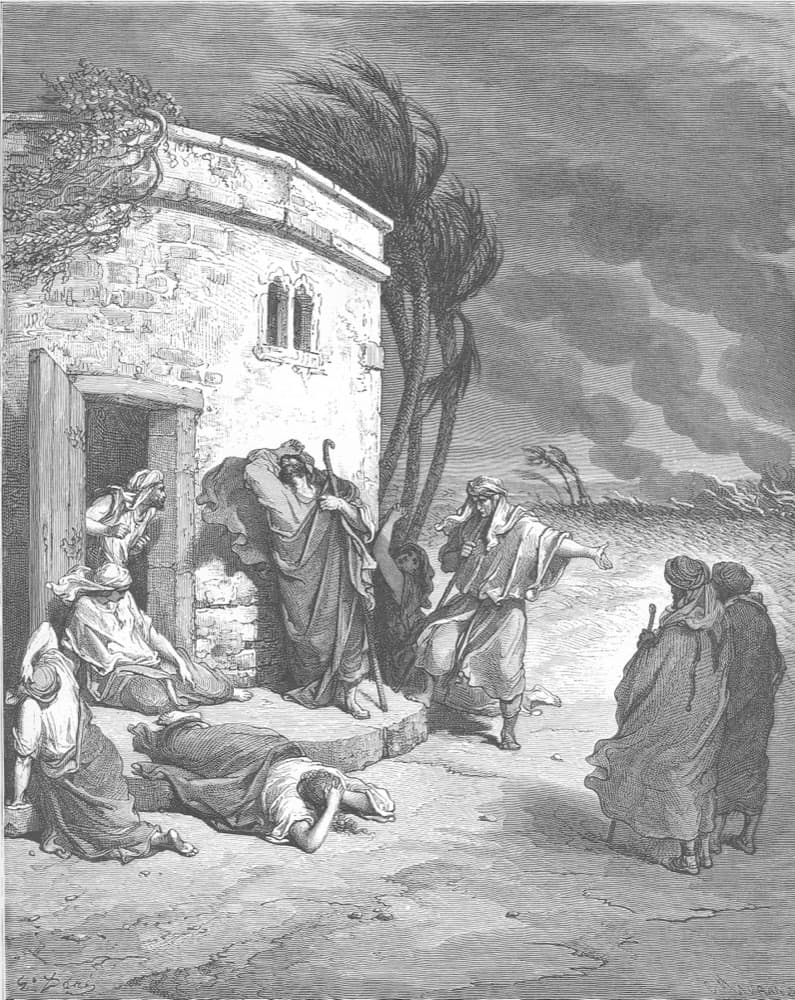
Job Hears of His Misfortunes
What scripture says, and what it refuses to say
Adversity
Scripture does not explain suffering away. It rejects the retributive explanation, names four things adversity can do, describes a God who has been beneath it, and then stops — which is more honest than most of what is said about the subject.
20 min2 sections
What it refuses
2And his disciples asked him, saying, Master, who did sin, this man, or his parents, that he was born blind?
3Jesus answered, Neither hath this man sinned, nor his parents: but that the works of God should be made manifest in him.
The retributive explanation is rejected outright, and it is rejected first — before anything constructive is said. Job's friends spend thirty-five chapters offering the same theory in more sophisticated forms, and the book's verdict on them is that they 'have not spoken of me the thing that is right.'
What it says
- Burdens are often made bearable rather than removed — Mosiah 24:14–15, where the people are strengthened before they are delivered. This is the commonest form of divine help and the least dramatic.
- Weakness is the mortal condition rather than a personal failing, and the promise is transformation rather than removal (Ether 12:27; 2 Corinthians 12:9).
- Experience is named as a result — 'all these things shall give thee experience, and shall be for thy good' (D&C 122:7) — which is a claim about outcome, not about cause.
- There is no floor lower than the one already occupied: 'The Son of Man hath descended below them all' (D&C 122:8).
- It ends. Revelation 21:4 is the last word scripture gives on the subject, and it is a promise rather than an explanation.
Principle
Scripture rejects the retributive explanation of suffering, describes help that often strengthens rather than removes, and offers a companion rather than a reason.
What this topic holds
Christ's knowledge of suffering was acquired in the flesh, so that He would know how to succour.
Check your reading
3 questions01How does Christ answer the disciples' question about the man born blind?
02What happens to Alma's people in Mosiah 24 before they are delivered?
03What does D&C 122:8 offer instead of an explanation?
Where to go next
Sources
- John 9; Job; Mosiah 24; D&C 121–122; Ether 12 — The primary texts.