Topics / Discipleship
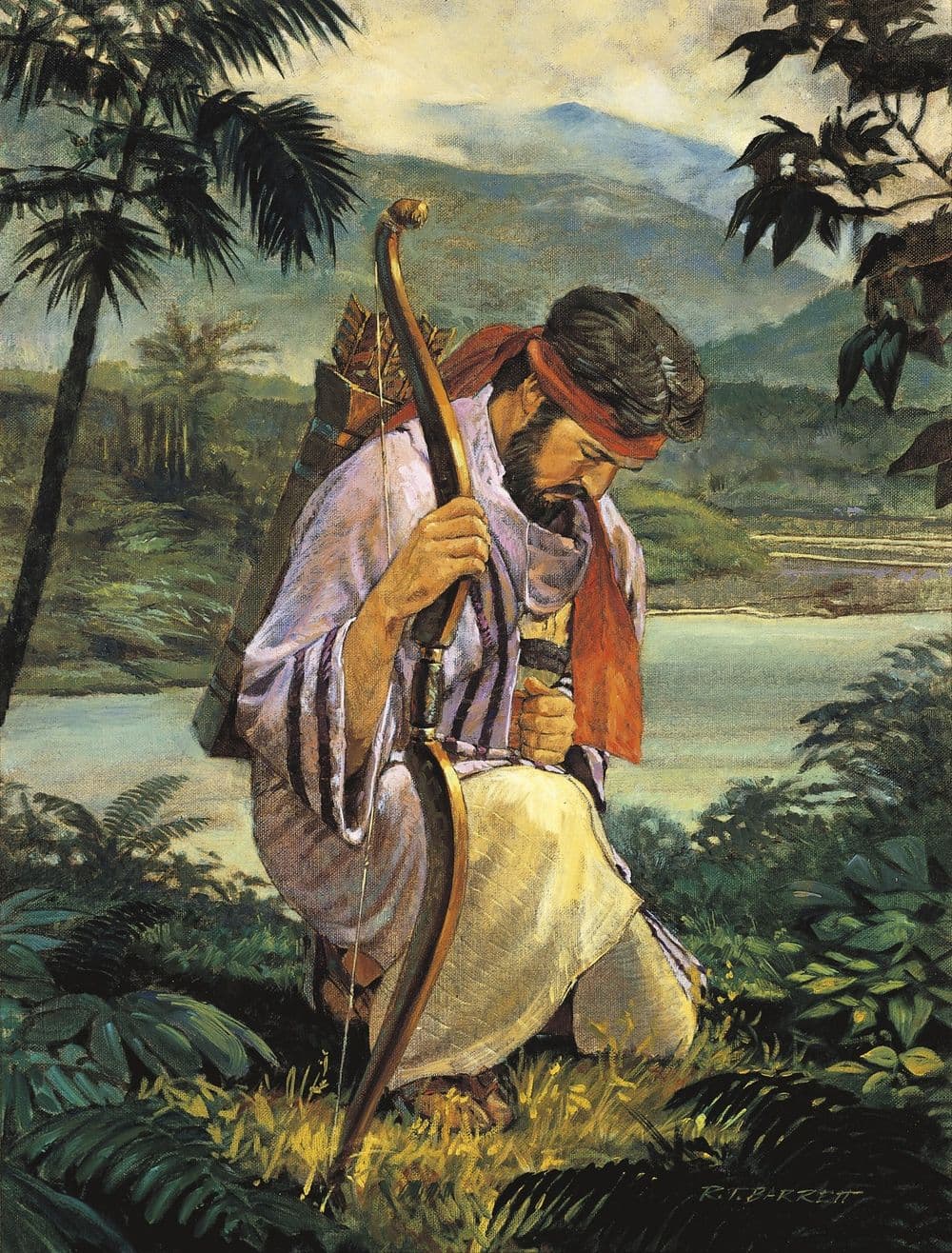
Enos Praying · Enos 1
What to say, and what to expect back
Prayer
Scripture gives a pattern, a warning about performance, an instruction to be specific, and a candid account of unanswered prayer. It also says, more than once, that the asking is itself part of what changes.
20 min2 sections
The pattern
7But when ye pray, use not vain repetitions, as the heathen, for they think that they shall be heard for their much speaking.
8Be not ye therefore like unto them, for your Father knoweth what things ye have need of before ye ask him.
9After this manner therefore pray ye: Our Father who art in heaven, hallowed be thy name.
Verse 8 states a fact that ought to make prayer unnecessary and does not: the Father already knows. Whatever prayer is for, it is not for informing God — which shifts the whole question toward what the asking does to the person asking, and to the relationship.
Cross-references
- Alma 34:17–27Amulek's list of what to pray about: fields, flocks, households, enemies, and 'against the power of your enemies' — the most domestic list in scripture.
- Alma 34:28The condition attached immediately: if you turn away the needy, 'your prayer is vain, and availeth you nothing.'
- Enos 1:2–9A whole day and into the night; then a voice; then the request widened from himself to his people, and then to his enemies.
- D&C 19:28; 2 Nephi 32:8–9Pray always, vocally and in the heart, and never perform anything to the Lord without praying first.
- Matthew 6:6In secret, with the door shut. The warning is against prayer performed for an audience.
What comes back
| Kind of answer | Where |
|---|---|
| Yes, given directly | Enos 1:5; 1 Nephi 18:3 |
| No, with a reason | 2 Corinthians 12:8–9 — 'my grace is sufficient for thee' |
| Not yet, with the burden made bearable meanwhile | Mosiah 24:13–15 |
| A stupor of thought | D&C 9:9 |
| Silence, in which the person is asked to keep walking | D&C 121:1–7; Psalm 13:1–2 |
Principle
God already knows the need, so prayer exists for the relationship and for the change it works in the person praying.
What this topic holds
Prayer is to be constant, specific, and private rather than performed.
A prayer offered by someone who turns away the needy is called vain in the same passage that commands prayer.
Check your reading
3 questions01What does 3 Nephi 13:8 say about the Father?
02What condition does Amulek attach immediately after telling people what to pray for?
03How does D&C 121 answer Joseph Smith's cry from Liberty Jail?
Where to go next
Sources
- Bible Dictionary, "Prayer"
- Alma 34; 3 Nephi 13; Enos 1; D&C 121 — The primary texts.