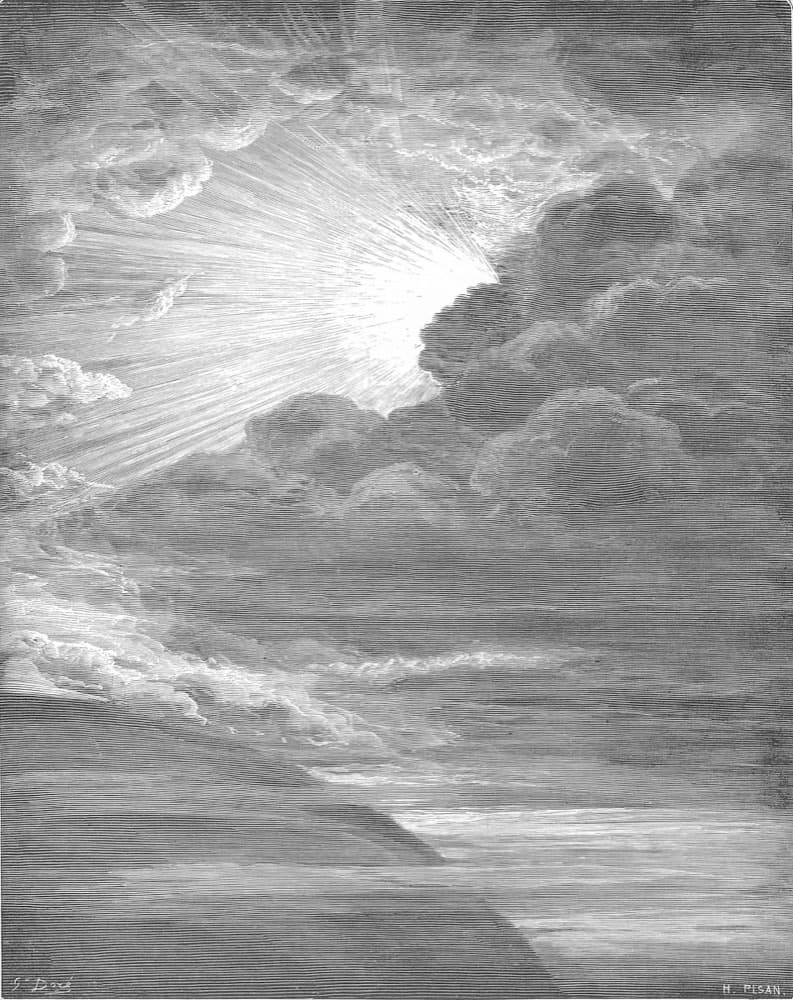
The Creation of Light
New Testament
The Word Made Flesh
John 1:1–18 in Greek, and D&C 93 as commentary
John 1:1–18; D&C 93:1–20; JST John 145 min4 sections
Eighteen verses that set the terms for every later argument about who Jesus is. The Greek repays close reading, the Joseph Smith Translation reads them differently than any other tradition, and D&C 93 supplies what looks like an independent version of the same hymn.
- Author
- John
- Date
- Traditionally late first century
- Place
- Ephesus, by tradition
- Audience
- A mixed readership fluent in both Jewish scripture and Greek thought
- Language
- Koine Greek
- Genre
- Prologue — many scholars read verses 1–18 as an adapted hymn
By the end you should be able to
- Parse the three clauses of John 1:1 and say what each contributes.
- Explain what eskēnōsen adds to "dwelt among us."
- State how the Joseph Smith Translation renders the prologue and what changes.
- Show how D&C 93 answers the difficulty in John 1:18.
Three clauses
1In the beginning was the Word, and the Word was with God, and the Word was God.
2The same was in the beginning with God.
3All things were made by him; and without him was not any thing made that was made.
4In him was life; and the life was the light of men.
5And the light shineth in darkness; and the darkness comprehended it not.
John 1:1, clause by clause
That grammatical detail matters more for Latter-day Saints than for most readers, because the prologue is often cited to prove that the Son and the Father are one being. The Greek of verse 1 in fact holds two things together: distinction (the Word was with God) and full deity (the Word was God). Latter-day Saint doctrine affirms both — three distinct persons, one God in perfect unity (3 Nephi 11:27; D&C 130:22).
The Joseph Smith Translation
King James
In the beginning was the Word,
and the Word was with God,
and the Word was God.
Joseph Smith Translation (JST John 1:1)
In the beginning was the gospel preached through the Son.
And the gospel was the word, and the word was with the Son,
and the Son was with God, and the Son was of God.
The JST is not a translation in the ordinary sense — Joseph Smith worked from an English Bible, not from Greek manuscripts, and the Church describes the result as an inspired revision that sometimes restores original text, sometimes clarifies, and sometimes supplies inspired commentary. Here it does something distinctive: it identifies the Word with the gospel preached through the Son, and separates the Son from God more explicitly than the Greek does.
"And dwelt among us"
14And the Word was made flesh, and dwelt among us, (and we beheld his glory, the glory as of the only begotten of the Father,) full of grace and truth.
The Book of Mormon reaches the same doctrine by a different road. Nephi's angel asks, "Knowest thou the condescension of God?" and then shows him the descent step by step (1 Nephi 11:16–33). Both texts insist that the descent was voluntary and that its measure is love.
"No man hath seen God at any time"
18No man hath seen God at any time; the only begotten Son, which is in the bosom of the Father, he hath declared him.
JSTAnd no man hath seen God at any time, except he hath borne record of the Son; for except it is through him no man can be saved.
Verse 18 as it stands is difficult for any reader, since the Old Testament repeatedly says people did see God — Moses spoke with Him face to face (Exodus 33:11), and the elders of Israel "saw the God of Israel" and ate and drank (Exodus 24:9–11). The JST resolves it by supplying an exception clause, and the Restoration's whole theological posture depends on that resolution: Joseph Smith's claim in 1820 is precisely that God can be and was seen.
D&C 93 is the other half of this unit. Received in May 1833, it reads like an expansion of the same hymn — and it makes an extraordinary claim in verse 6, that John's record was fuller than what survives.
1Verily, thus saith the Lord: It shall come to pass that every soul who forsaketh his sins and cometh unto me, and calleth on my name, and obeyeth my voice, and keepeth my commandments, shall see my face and know that I am;
2And that I am the true light that lighteth every man that cometh into the world;
8Therefore, in the beginning the Word was, for he was the Word, even the messenger of salvation—
9The light and the Redeemer of the world; the Spirit of truth, who came into the world, because the world was made by him...
36The glory of God is intelligence, or, in other words, light and truth.
Verse 1 is a promise, not a description: every soul who forsakes sins, comes, calls, obeys and keeps "shall see my face and know that I am." John's prologue says God has been declared by the Son; D&C 93 says the declaration ends in sight.
What this lesson holds
Jesus Christ existed before the Creation and created all things under the Father.
The Incarnation is God's presence made portable — the tabernacle in a body.
The light of Christ lights every person who comes into the world.
God may be seen, on conditions He sets.
JST John 1:19 · D&C 93:1 · Exodus 33:11 · Joseph Smith—History 1:17
Check your reading
5 questions01What does the preposition pros in "the Word was with God" indicate?
02What does eskēnōsen mean in John 1:14?
03How does the Joseph Smith Translation render John 1:1?
04What does the JST add to John 1:18?
05What does D&C 93:1 promise?
Where to go next
Sources
- John 1; D&C 93; JST John 1 — The primary texts.
- Bible Dictionary, "Joseph Smith Translation"
- New Testament Student Manual — Church Educational System, chapter on John 1