Topics / Covenants and Ordinances
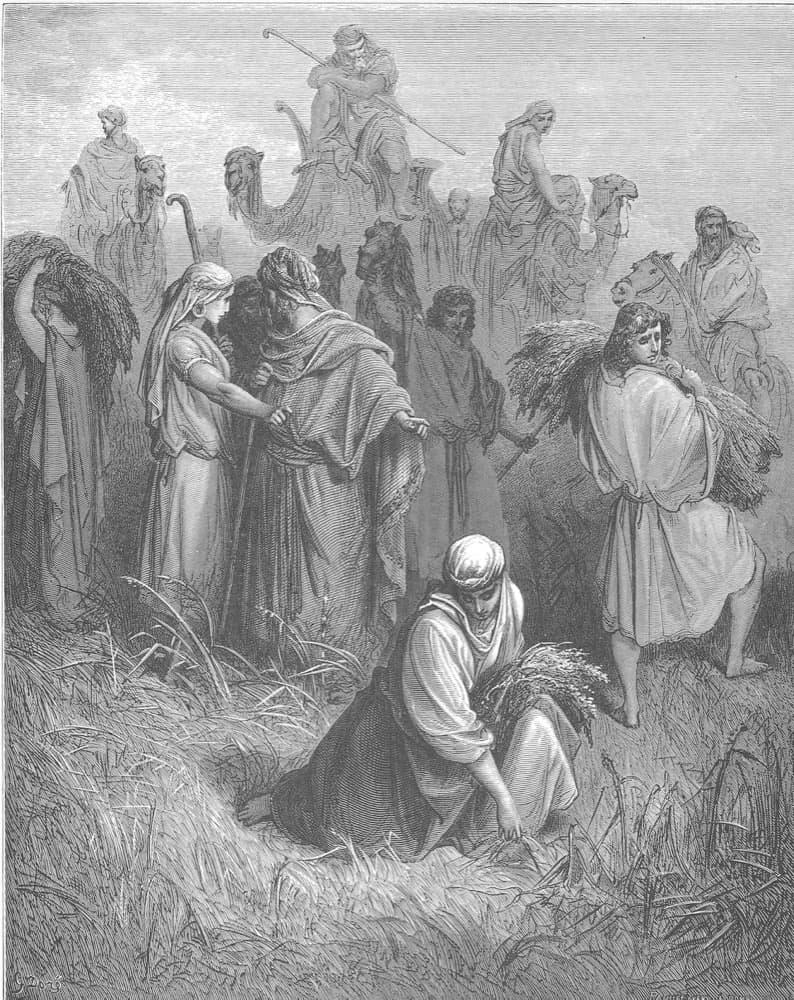
Ruth and Boaz
The law that has never been rescinded
Consecration
The united order failed as an economic experiment and the law behind it was never withdrawn. Scripture defines Zion by an outcome — no poor among them — and the modern Church operates a version of the same principle every fast Sunday.
20 min2 sections
The law
30And behold, thou wilt remember the poor, and consecrate of thy properties for their support that which thou hast to impart unto them, with a covenant and a deed which cannot be broken.
31And inasmuch as ye impart of your substance unto the poor, ye will do it unto me; and they shall be laid before the bishop of my church and his counselors…
32…every man shall be made accountable unto me, a steward over his own property, or that which he has received by consecration, as much as is sufficient for himself and family.
Note what the law actually does: property is consecrated and then a stewardship is returned. It is not communal ownership — 'a steward over his own property' — and the accountability runs to God rather than to a committee. The nineteenth-century attempts to implement it failed for practical and legal reasons, not because the principle was withdrawn.
Cross-references
- Moses 7:18The definition of Zion, in one sentence: of one heart and one mind, dwelling in righteousness, and no poor among them.
- 4 Nephi 1:3'They had all things common among them; therefore there were not rich and poor' — and it lasted about two centuries.
- Acts 4:32–35The Jerusalem church doing the same thing, with distribution according to need.
- Jacob 2:17–19Seek riches only after a hope in Christ, and then only to do good — the order is stated explicitly.
- D&C 104:15–18'It must needs be done in mine own way'; and 'the world lieth in sin' precisely for failing this.
What it looks like now
- The fast offering — money that would have been spent on two meals, given for the poor. Isaiah 58:6–7 defines fasting in exactly these terms.
- Tithing, which is a lesser law preparatory to consecration rather than a substitute for it (D&C 119 was given after the united order was suspended).
- The temple covenant of consecration, which members make and which is not about a specific percentage.
- Welfare and humanitarian work, and the ministering assignments that are the everyday form of bearing one another's burdens.
Principle
Consecration is a law of stewardship rather than of ownership, and Zion is defined by an outcome — no poor among them — rather than by a system.
What this topic holds
Everything a person has is held in stewardship, and accountability for it runs to God.
Zion is defined by the absence of poverty among its people, not by any particular economic mechanism.
Check your reading
3 questions01What does the law of consecration return to the individual?
02How does Moses 7:18 define Zion?
03How does Isaiah 58 define an acceptable fast?
Where to go next
Sources
- Gospel Topics, "Consecration, Law of"
- D&C 42; D&C 104; Moses 7; 4 Nephi — The primary texts.