Come, Follow Me / 2026 / week 40
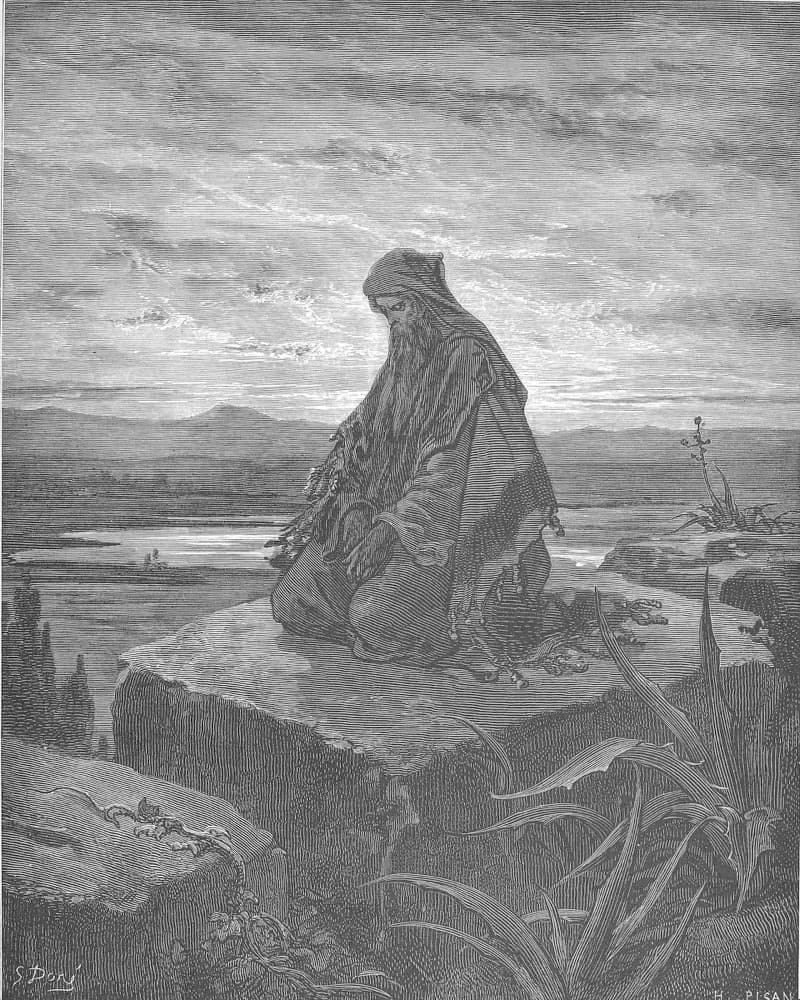
The Prophet Isaiah
Week 40 of 52
study guideIsaiah 40–49
September 28–October 4, 2026
“Comfort ye my people” — and the section whose authorship is genuinely contested, which matters for the brass plates in a way this library does not skip.
The big idea
The God who numbers the stars knows each of His people by name — and He has already paid to bring them home.
Step 1 · Get your bearings
Before you read
Who is speaking, to whom, and what was happening to them.
- When
- Isaiah of Jerusalem prophesied c. 740–700 BC. Chapters 40–55 speak to Judah in Babylonian exile, c. 550–540 BC.
- Where
- Addressed to Jews deported to Babylon, with Jerusalem and its temple in ruins behind them.
- Who
- A covenant people wondering whether their God had been defeated by Babylon's gods — or had simply forgotten them.
What was happening
Everything the first thirty-nine chapters warned about had happened. Isaiah 40 opens on the question every exile was asking — is it over? — and answers it with comfort, a road home across the desert, and a long argument about who God is.
Step 2 · See the whole
The shape of the week
The tone of Isaiah changes at chapter 40 so sharply that you can feel it in the first word. Chapters 1–39 are largely warning; from here to the end, the book is about return. God is going to lead a second exodus — not out of Egypt this time but out of Babylon — and the chapters build the case that He is able to.
Two arguments run through the week. The first is that nothing compares to God: He measured the waters in His hand (40:12), calls every star by name (40:26), and in 44:9–20 Isaiah mocks the idol-maker who cooks his dinner over half a log and bows down to the other half. The second is the Servant — a figure introduced in 42:1–4 and 49:1–6 who will bring justice gently and be a light to the Gentiles. The New Testament identifies Him plainly.
An honest note on authorship. Many scholars assign chapters 40–55 to an unnamed prophet writing in exile, partly because 44:28 and 45:1 name Cyrus, the Persian king who freed the Jews in 538 BC, about a century and a half early. Latter-day Saints notice that Nephi quoted chapters 48–49 from the brass plates, which left Jerusalem around 600 BC — before the exile began. The disagreement is real, and the Isaiah topic in this library sets out the evidence on both sides. This guide reads the chapters the way the Book of Mormon does.
Step 3 · Read
Day by day
The block in seven readings, each with one thing to look for. Tick a day off when you have read it.
MonSep 28
Count the questions God asks. What is each one meant to do to a discouraged person?
TueSep 29
Find the Servant in 42:1–7. What will He do — and notice how gently He does it.
WedSep 30
List everything God says He will do for Israel. What does He call them in verse 1?
ThuOct 1
Read the idol-maker in 44:9–20 slowly. What does he warm himself with, and what does he worship?
SunOct 4
Read 49:14–16 twice. What does “graven thee upon the palms of my hands” mean to you now?
Step 4 · Go slowly
Key passages
The verses the week turns on — what they meant to the people who first heard them, and what they mean for you. Tap any verse to mark it.
1Passage 1 of 4
Comfort comes first
Isaiah 40:1–5ot 1Comfort ye, comfort ye my people, saith your God.
2Speak ye comfortably to Jerusalem, and cry unto her, that her warfare is accomplished, that her iniquity is pardoned: for she hath received of the Lord’s hand double for all her sins.
3The voice of him that crieth in the wilderness, Prepare ye the way of the Lord, make straight in the desert a highway for our God.
4Every valley shall be exalted, and every mountain and hill shall be made low: and the crooked shall be made straight, and the rough places plain:
5And the glory of the Lord shall be revealed, and all flesh shall see it together: for the mouth of the Lord hath spoken it.
What it meant then
To exiles, “her warfare is accomplished” meant the term of hard service was finished, and “double for all her sins” meant the debt had been paid in full. The highway in the desert is a new exodus: God is building a road home from Babylon.
What it means now
All four Gospels apply verse 3 to John the Baptist, preparing the way for Jesus (Matthew 3:3; John 1:23). The same pattern holds in any wilderness: before God asks anything of a broken people, He speaks to them tenderly.
In the original Hebrew
Ask yourself
What wilderness in your own life needs a road built through it?
2Passage 2 of 4
They that wait upon the LORD
Isaiah 40:28–31ot 28Hast thou not known? hast thou not heard, that the everlasting God, the Lord, the Creator of the ends of the earth, fainteth not, neither is weary? there is no searching of his understanding.
29He giveth power to the faint; and to them that have no might he increaseth strength.
30Even the youths shall faint and be weary, and the young men shall utterly fall:
31But they that wait upon the Lord shall renew their strength; they shall mount up with wings as eagles; they shall run, and not be weary; and they shall walk, and not faint.
What it meant then
Just before this, Israel complains, “My way is hid from the Lord” (40:27). The answer is not an explanation of their suffering but a description of God: the Creator never faints, and He gives strength to the ones who do.
What it means now
Notice the order at the end: mount up, run, walk. It sounds backwards until you have lived it. Some days the promise is flight; most days it is simply walking and not fainting — which may be the greater miracle.
In the original Hebrew
Ask yourself
Which of the three — mounting up, running, or walking — describes the strength you need this week?
3Passage 3 of 4
Called by name
Isaiah 43:1–3, 10–11ot 1But now thus saith the Lord that created thee, O Jacob, and he that formed thee, O Israel, Fear not: for I have redeemed thee, I have called thee by thy name; thou art mine.
2When thou passest through the waters, I will be with thee; and through the rivers, they shall not overflow thee: when thou walkest through the fire, thou shalt not be burned; neither shall the flame kindle upon thee.
3For I am the Lord thy God, the Holy One of Israel, thy Saviour: I gave Egypt for thy ransom, Ethiopia and Seba for thee.
10Ye are my witnesses, saith the Lord, and my servant whom I have chosen: that ye may know and believe me, and understand that I am he: before me there was no God formed, neither shall there be after me.
11I, even I, am the Lord; and beside me there is no saviour.
What it meant then
Israel's identity is laid out in four verbs: God created them, formed them, redeemed them and called them. The waters and the fire recall the Red Sea and the furnace of affliction — things they would pass through, not around.
What it means now
Verse 11 — “beside me there is no saviour” — is spoken by Jehovah. In the Restoration's reading, Jehovah is the premortal Jesus Christ (3 Nephi 15:5). The Redeemer who calls Israel by name here is the Savior of the New Testament.
In the original Hebrew
King James renders it “I have redeemed thee”
From gāʾal, the duty of the nearest relative to buy back a family member sold into debt or slavery (Leviticus 25:47–49; Ruth 4). God is not describing a transaction with strangers. He is claiming the obligation of family.
Full lexicon entry →
Ask yourself
What changes when you hear “thou art mine” said to you, specifically, by name?
4Passage 4 of 4
Graven upon the palms of My hands
Isaiah 49:13–16ot 13Sing, O heavens; and be joyful, O earth; and break forth into singing, O mountains: for the Lord hath comforted his people, and will have mercy upon his afflicted.
14But Zion said, The Lord hath forsaken me, and my Lord hath forgotten me.
15Can a woman forget her sucking child, that she should not have compassion on the son of her womb? yea, they may forget, yet will I not forget thee.
16Behold, I have graven thee upon the palms of my hands; thy walls are continually before me.
What it meant then
Zion says, “The Lord hath forsaken me.” God answers with the strongest bond people know — a nursing mother — and says that even that could fail before He would forget them.
What it means now
Nephi copied this chapter onto his plates (1 Nephi 21). Readers have long seen in verse 16 the wounds the risen Savior invited the Nephites to feel (3 Nephi 11:14–15). What is engraved is permanent.
In the original Hebrew
King James renders it “graven”
Not written on the surface, but cut into it — the verb used for inscribing a decree in stone. A name written on the hand can be washed off. A name engraved there cannot.
Ask yourself
When have you felt forgotten — and what would it take to believe verse 16?
Every page points to Him
Look for Christ
“They are they which testify of me” (John 5:39). Where this week's reading does.
The voice in the wilderness
Isaiah 40:3 is one of very few Old Testament verses quoted in all four Gospels, each time of John the Baptist preparing the way for Jesus. Isaiah's highway for the Lord becomes a man in the desert pointing to the Lamb of God.
The Servant who will not break a bruised reed
Isaiah 42:1–4 is the first of four Servant Songs (42, 49, 50, 52–53). Matthew quotes it word for word to explain why Jesus healed quietly and told people not to publicise it: He would not break a bruised reed or quench a smoking flax.
Every knee shall bow
In Isaiah 45:23 Jehovah swears that “unto me every knee shall bow.” Paul applies exactly that line to Jesus in Philippians 2 — the plainest New Testament statement that the Lord of Isaiah and Jesus of Nazareth are the same.
Latter-day light
What the Restoration adds
What the Book of Mormon, the Doctrine and Covenants, the Pearl of Great Price and the Joseph Smith Translation bring to this block.
Nephi's Isaiah
1 Nephi 20–21 reproduce Isaiah 48–49 from the brass plates, with differences. The most striking is in 1 Nephi 20:1, which adds that Israel came “out of the waters of baptism.” Nephi then explains the chapters himself in 1 Nephi 22, and tells his readers to “liken all scriptures unto us.”
Gentile kings as nursing fathers
Isaiah 49:22–23 promises that Gentile kings and queens would carry Israel's children home. Nephi and Jacob both read it as the latter-day gathering, carried out with the help of a Gentile nation on this continent.
Isaiah 49:22–23 · 1 Nephi 22:6–9 · 2 Nephi 6:6–7 · 2 Nephi 10:8–9
What to carry out of the week
Principles to live
- 1
God's comfort comes before His commandments.
Isaiah 40 begins with tenderness to people who have not yet repented, and only afterwards makes any demand of them.
- 2
Waiting on the Lord is active hope, and it renews strength by exchanging ours for His.
- 3
The Lord knows His people individually and by name.
- 4
Jehovah of the Old Testament is Jesus Christ.
The Savior told the Nephites, “I am he that gave the law, and I am he who covenanted with my people Israel.”
- 5
Idols are things we make and then have to carry; God is the one who carries us.
Make it yours
Ponder and record
Pick one question. Write what comes — a sentence is enough.
- 01In 40:27 Israel says, “My way is hid from the Lord.” Where do you hear yourself saying something like that?
- 02The idol-maker in 44:17 bows to the leftover half of his firewood. What do people make with their own hands today and then trust?
- 03In 46:1–4 the idols must be carried, but God carries His people. Which describes your relationship with the things you rely on?
- 04If Jehovah and Jesus Christ are the same person, how does that change the way you read the Old Testament?
- 05Nephi told his people to “liken” Isaiah to themselves. Choose one verse this week and write it out with your own name in it.
Kept on this device, and collected in your notebook with everything else.
Teaching it
At home or in class
Simple ways to study this week together.
- Idea 1Read 40:31 together and act it out — mount up, run, walk. Talk about which is hardest, and why the verse ends with walking.
- Idea 2Trace each person's hand on paper and write their name on the palm to go with 49:16. Put them somewhere you will see them all week.
- Idea 3Carry a heavy bag around the room, then set it down. Read 46:1–4 and talk about the difference between what we carry and what carries us.
Keep going
More in this library
Full lessons, topics and word studies that bear on this week's block.
Doctrinal topics
The doctrine this block raises, followed wherever it goes in the canon.
Reference chains
Passages in a deliberate order, each step earning the next.
Hebrew & Greek
The words underneath the English, where the translation cost something.
Sources
- Come, Follow Me — For Home and Church: Old Testament 2026
- Old Testament Student Manual: 1 Kings–Malachi — Church Educational System, on Isaiah 40–49
- Bible Dictionary, “Isaiah”
- Brown, Driver and Briggs, A Hebrew and English Lexicon of the Old Testament — s.v. נחם, קוה, חלף, חקק
Scripture text is the Church’s edition of the King James Version, fetched from the Gospel Library rather than retyped.